Technology Product Development Aliera Concept · 2014 Concept — Open to Partners

Intelligent Store Stacking

The shelf that drives itself from the warehouse to the aisle

Supermarket stacking — moving goods from distribution to the shelf, box by box, hand by hand — costs a single large chain £20–30 million a year. This concept deletes the double handling: shelves pre-stacked at the distribution centre that drive themselves into the store and park at the aisle, already merchandised.

First presented in 2014 — before today's warehouse-robotics wave. The building blocks now run across Aliera's vehicle, edge-AI, and retail-intelligence work.
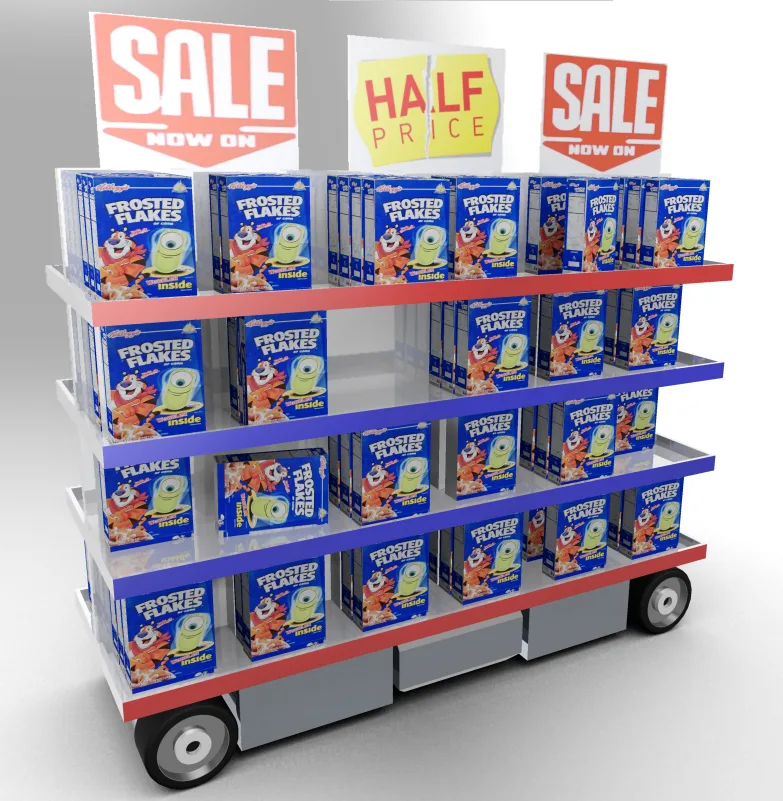
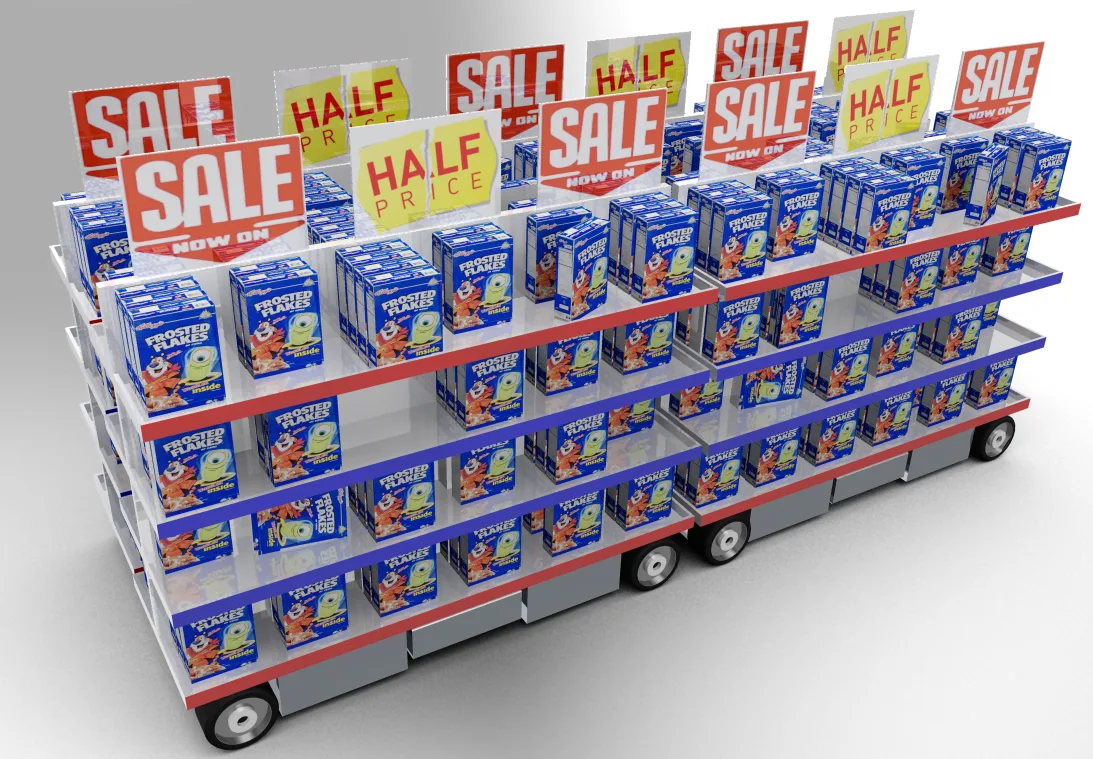
Concept render of a self-driving pre-stacked shelf platform, fully merchandised with signage, on its own wheeled base

Stock once, at the depot. Never touch it again.

A self-propelled shelf platform: sensors, batteries, and motors built into the base — the display unit is the logistics unit.

Pre-stacked and merchandised at the distribution centre, where labour, automation, and quality control are cheapest — then driven, not carried, to the shop floor.

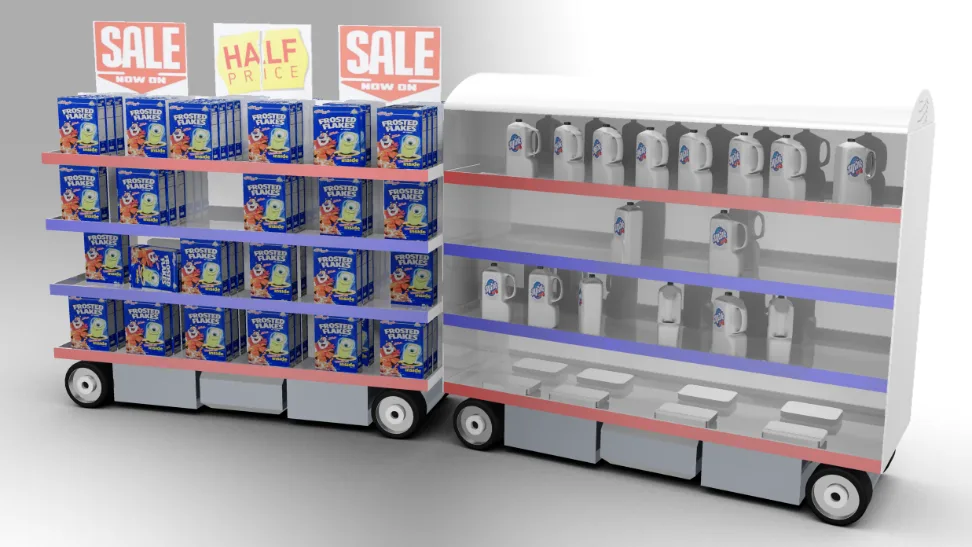
Cold chain included: a refrigerated variant carries its own cooling, keeping chilled goods within temperature from depot to aisle without a single transfer.

Platooning and matrix formation: units follow each other in convoy, then self-arrange into a dense matrix for loading — into a standard truck, or a modular vehicle built around them, like our adaptive vehicle platform.

Depleted units drive themselves back for restacking — replenishment becomes a loop, not a nightly shelf-packing shift.

Concept render: open shelf unit alongside the enclosed refrigerated variant with built-in cooling Concept render: multiple stacked shelf units platooning in convoy formation
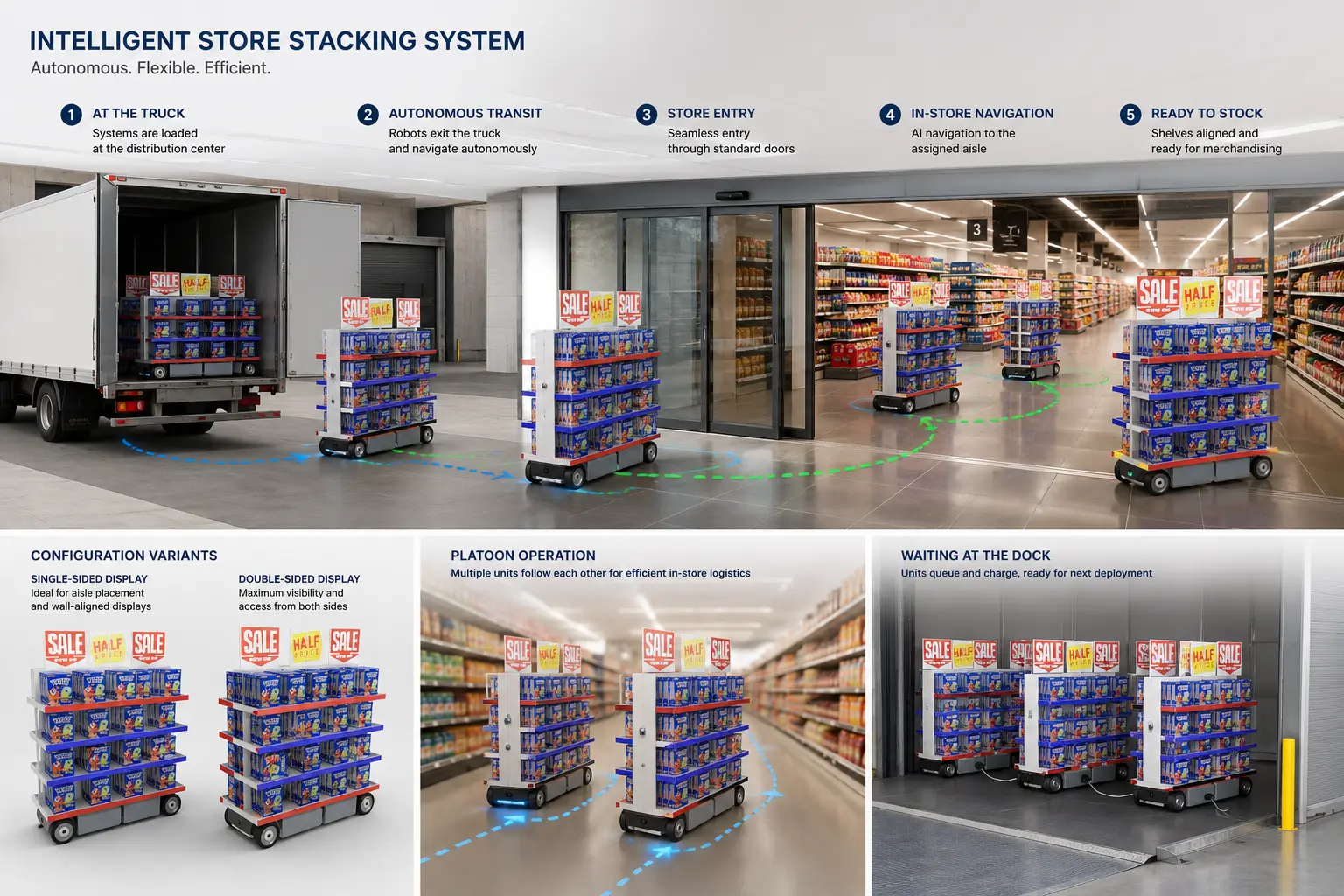
How the system moves: units loaded at the distribution centre, exiting the truck autonomously, entering the store through standard doors, navigating to the assigned aisle, and ready to stock — with single- and double-sided display variants, platoon operation, and dock charging
The journey, end to end: truck → autonomous transit → store entry → in-store navigation → ready to stock. Units platoon in transit and queue-charge at the dock between runs.

In 2014 this was a render. Today it's an integration.

Every subsystem the concept needs is something Aliera has since built and deployed elsewhere — which is exactly why we've kept it on the shelf, ready to take down.

Vehicle Systems

Modular platforms, in-hub motors, battery packs, and active structures from our EV architecture and SAHER programmes.

Edge AI & Vision

On-device navigation, obstacle awareness, and shelf-state recognition — the same computer vision that tracks stock in our retail intelligence platform.

Fleet IoT & Analytics

Asset tracking, tamper-proofing, remote management, and demand-driven scheduling: which stack, which store, which aisle, when.

Layered on top: demand forecasting decides what each unit carries before it leaves the depot; planogram data decides where it parks; and the store's aisles become reconfigurable overnight — merchandising as software.

An idea we shelved. Deliberately retrievable.

We presented Intelligent Store Stacking in 2014 and moved on to build its ingredients. If you're a retailer, logistics operator, or automation company working on warehouse-to-aisle systems — or want to be — we're open to co-developing this class of system: the concept, the vehicle platform, the edge intelligence, or all of it.

Working on retail or logistics automation?

From concept studies to deployed systems — we build the vehicle, the intelligence, and the operations layer. Let's compare notes.

Start a Conversation →