Sustainable Automotive Hybrid Electric Resources
Electrification that starts with the vehicles already on the road. SAHER retrofits existing motorcycles to electric and hybrid drive in 30 minutes, builds its own power-split hybrid powertrain for three-wheelers, and wraps both in an AI layer that learns driver behaviour, manages battery health, and switches between electric and petrol on its own.
Built on 25 years of automotive engineering, manufacturing-process, and embedded-AI development · presented at the Asian Development Bank's Asia Clean Energy Forum.
The Problem
Petrol has risen from PKR 120 to PKR 260 per litre — peaking at PKR 330 — pushing the running cost of an ordinary motorcycle up more than 150% in under two years.
Pakistan has 24 million motorcycles on the road and 1.2 million new buyers a year, yet local electric-motorcycle capacity is 10–20 thousand units a year against that demand.
Imported scooters cost PKR 220–700K, dollar-pegged, with fixed batteries that lock riders into range anxiety — and importers rarely have the facilities to service them.
Charging infrastructure is a handful of stations; battery swapping is still in pilot infancy. Meanwhile each motorcycle emits ~0.84 tonnes of CO2e a year — motorcycles account for the bulk of transport emissions.
The Answer
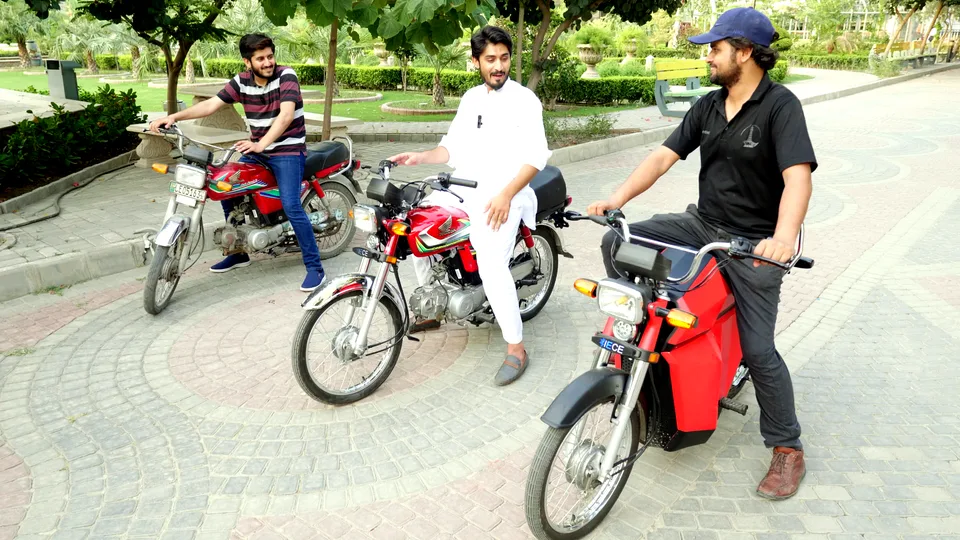
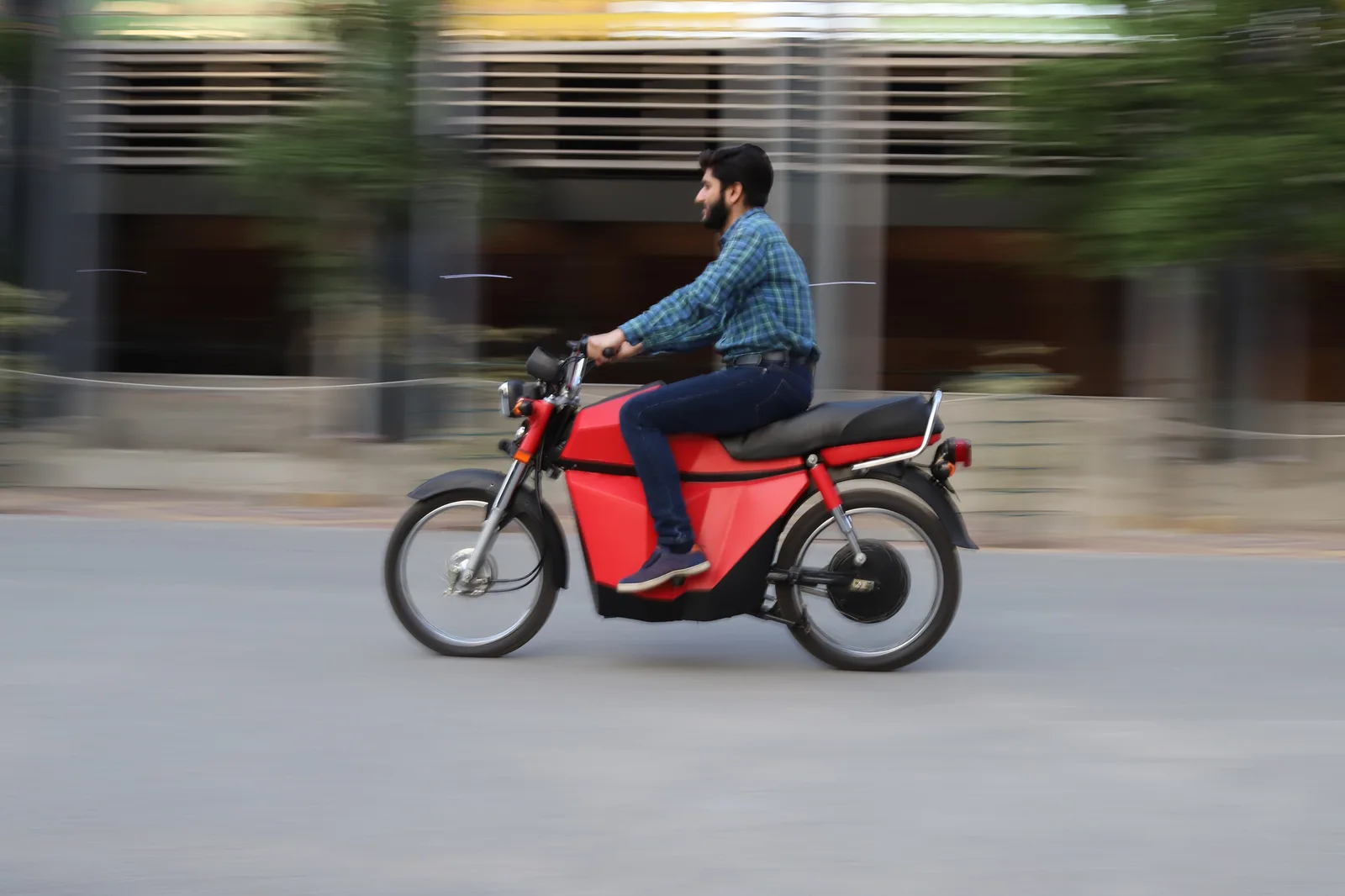
SAHER's process converts an existing motorcycle to electric or hybrid drive in a 30-minute fitting (process patent pending). A swappable battery, a built-in range extender, and switchable petrol-engine control remove the two blockers that stall EV adoption in developing markets: upfront cost and charging infrastructure.
Two-Wheelers
Swappable 1.2 kWh battery with an in-house battery management system — subscribe, swap, and go, no fixed charging stop required.
Hybrid switching: electric, petrol, and engine-charging modes. The retained IC engine doubles as a range extender, so a retrofitted bike can take on long rides no charging network could support.
1.5 kW motor, 75 km/h, 50 km electric range before the extender takes over.
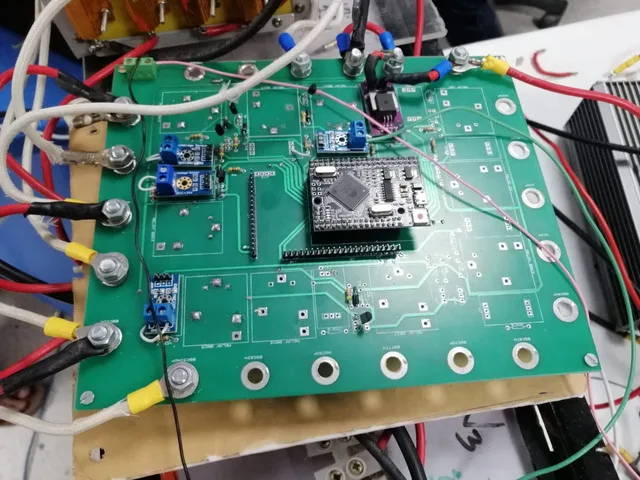
Supervisory controller monitoring every subsystem and the health of every swapped battery. All electronics design and embedded programming is done in-house — serviceable locally, cheaper to produce.
Cell-based assembly, not an assembly line: two-person retrofitting cells — including container-type units and trained aftermarket workshops — scale capacity from 1,000 to 25,000+ vehicles a year, with AI-monitored fault-tolerance checks during the process.
The SAHER Bike
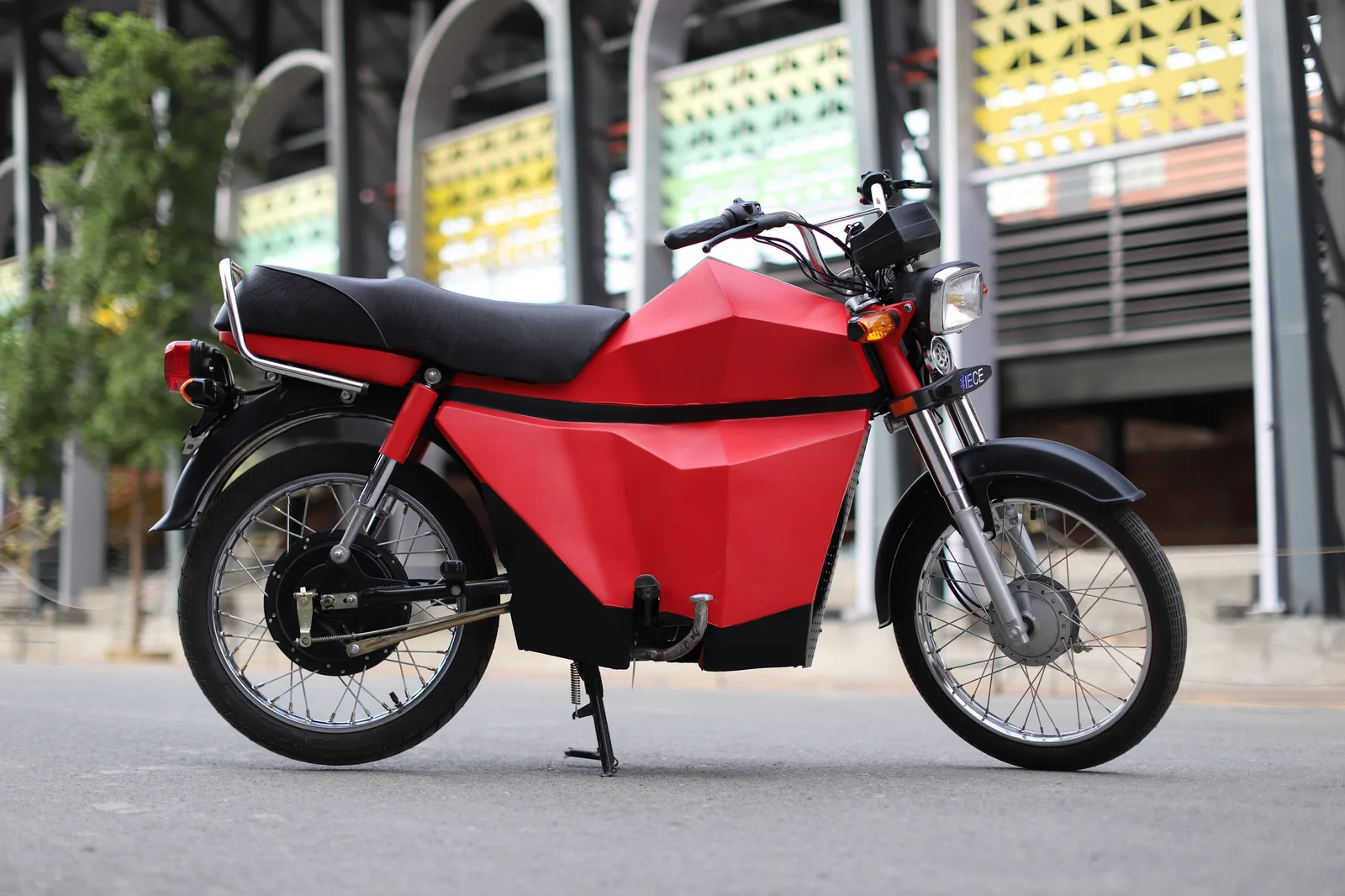
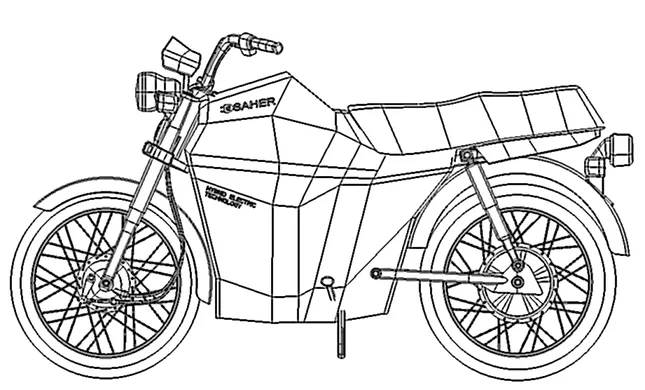
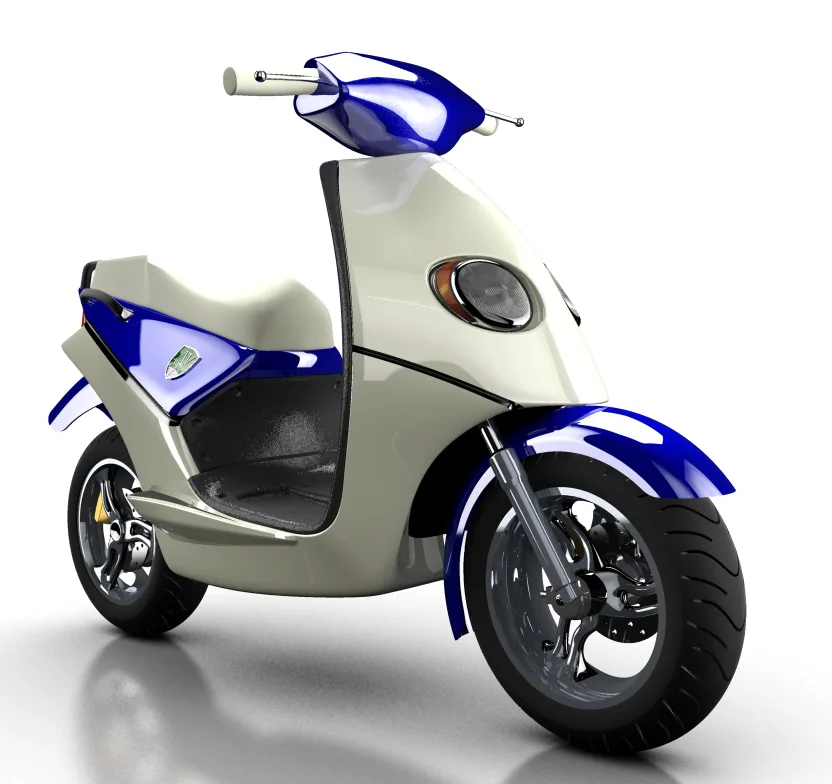
Alongside retrofitting, SAHER developed its own motorcycle: a hyper-lightweight frame-free body structure engineered in Italy and the UK on origami structural-rigidity principles. The platform is modular — the same building blocks convert to scooter and three-wheel configurations, including designs that work with any clothing — and is offered as an OEM base for other manufacturers. Specs: 1.5 kW motor, 80 km range, 75 km/h, swappable 1.8 kWh battery.
Three-Wheelers
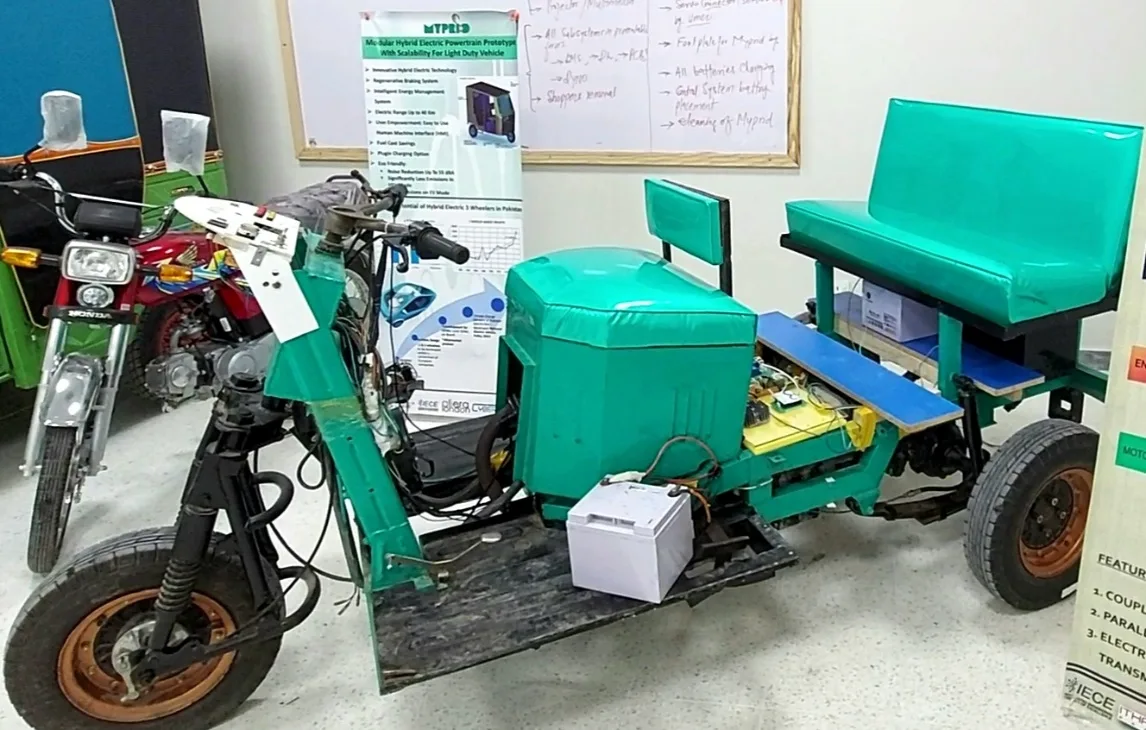
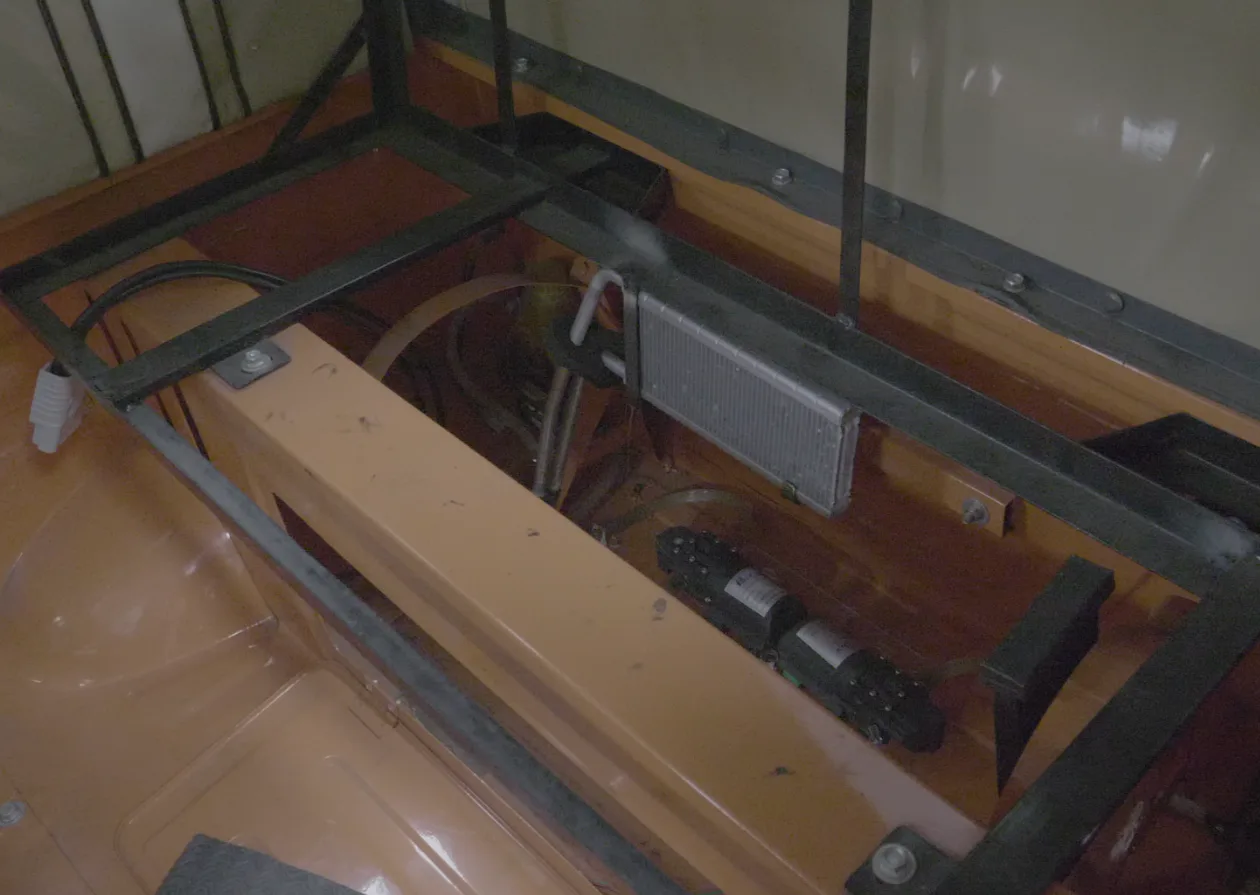
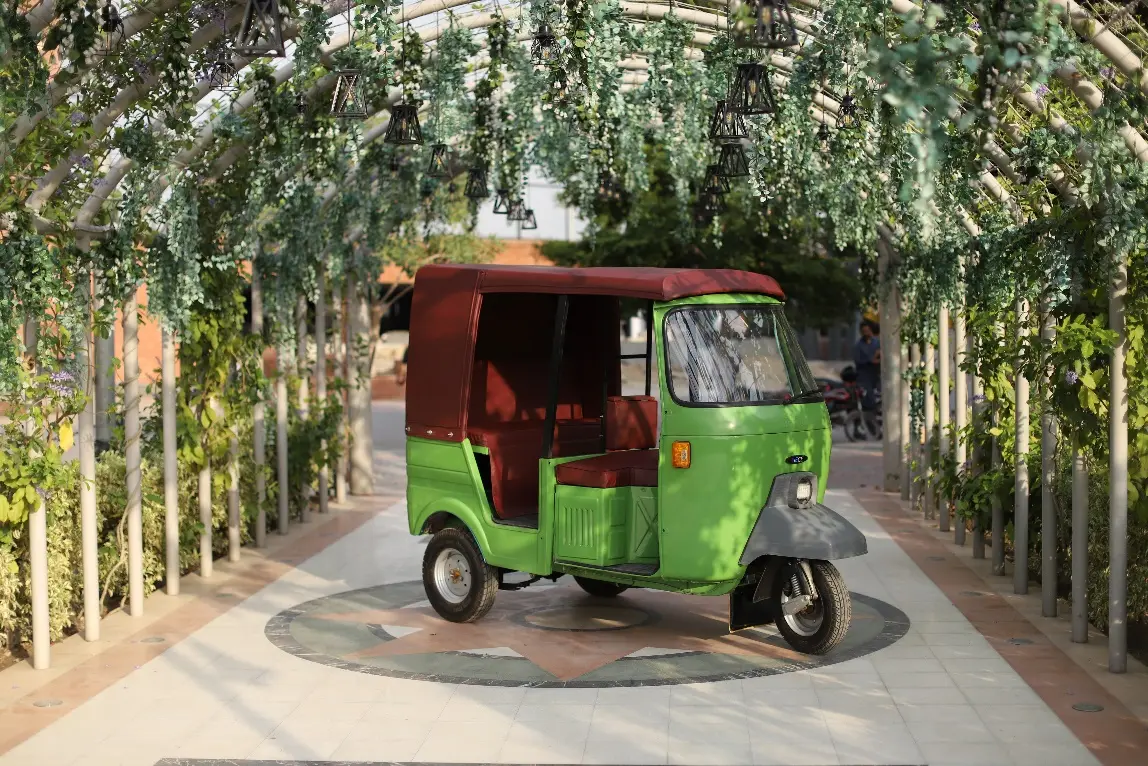
For three-wheelers, SAHER went deeper than retrofitting — developing MYPRID, a scalable plug-in hybrid electric powertrain module for light-duty vehicles under a nationally funded R&D programme. At its core is a power-splitting device that blends a smaller petrol engine with substantial electric drive, harvesting the braking energy of stop-start urban traffic. The full stack — power splitter, battery management system, motor controllers, and drivers — was designed in-house, and the same systems now underpin the two-wheeler kits. The running prototype completed its R&D phase in 2021 and has entered commercial development; the module is scalable to four-wheel vehicles and can be supplied to OEMs as an independent product or fitted aftermarket.
The AI Layer
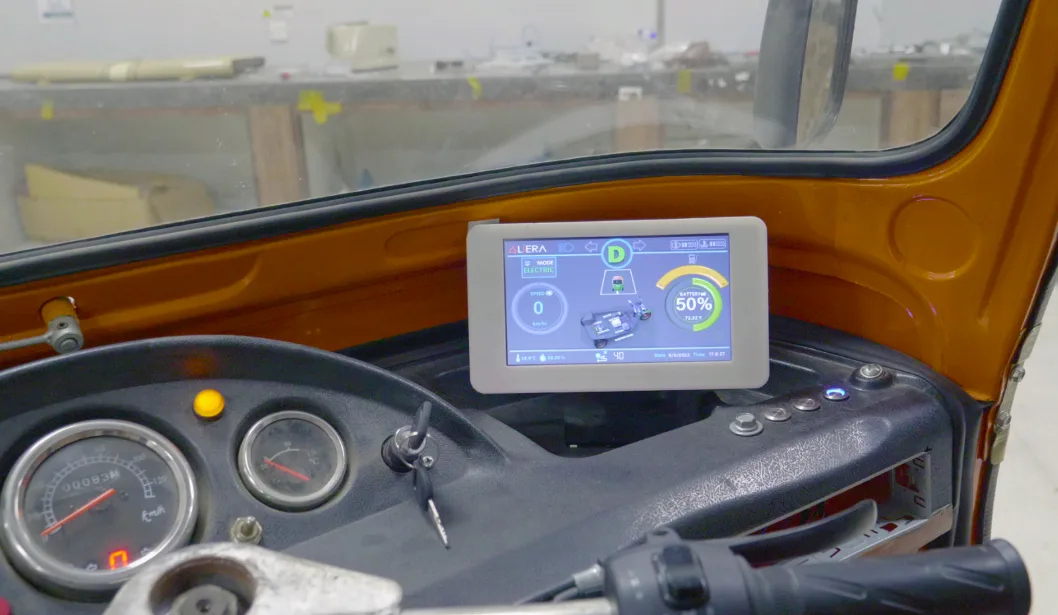
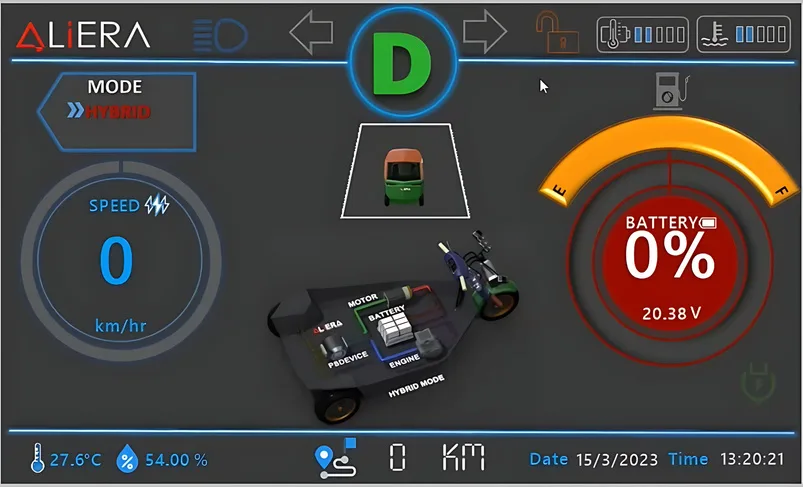
Every SAHER vehicle carries an embedded smart supervisory controller and integrated data logger. What it does with that data is the differentiator:
Drive-cycle prediction: multisensorial logging of driver behaviour feeds AI analytics that predict the drive cycle ahead — and, on hybrids, switch between electric and petrol automatically for the cheapest, cleanest kilometre.
Battery health to the single cell: charge–discharge mapping and health prediction for swappable battery fleets, so a degraded pack never reaches a rider.
IoT asset management: vehicle tracking, tamper-proofed electronics and batteries, remote shutdown, and phone-app control — with fleet and financer views for leasing programmes.
A dynamic charging network: vehicle-to-vehicle and vehicle-to-infrastructure connectivity routes riders to the next available charge or swap — the analytics that let stations be placed where demand actually is.
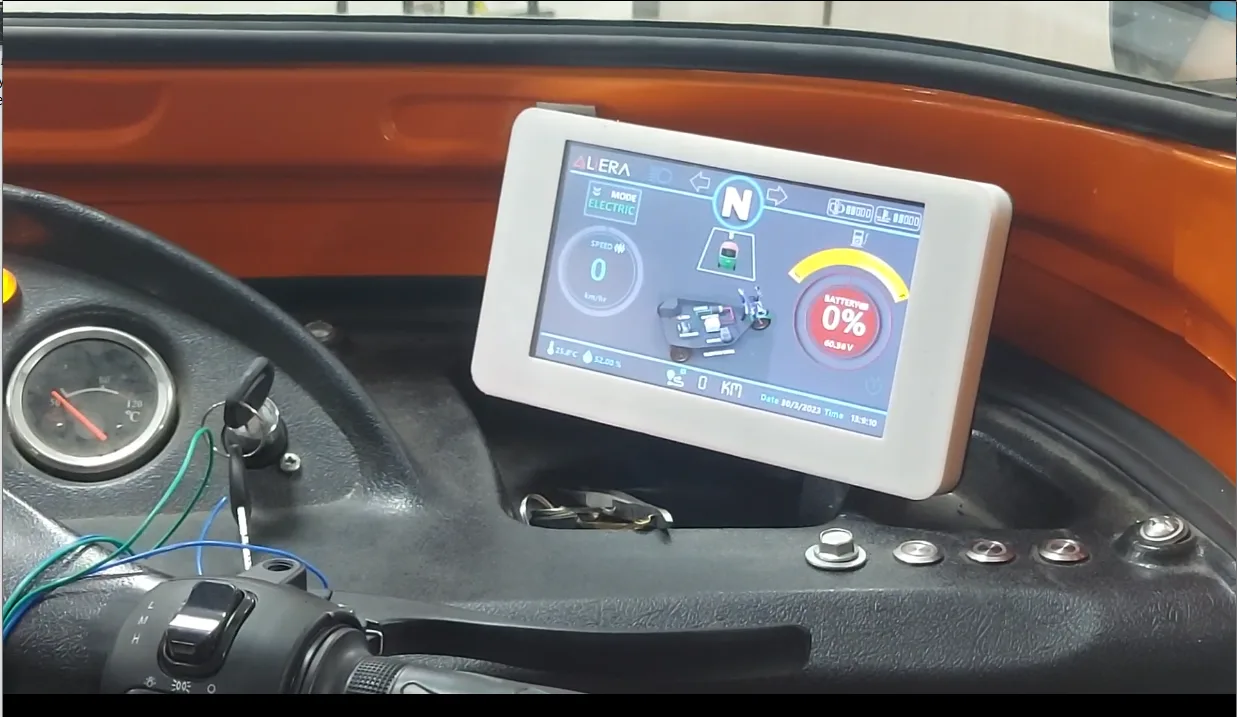
Interfaces shown are representative of the deployed systems.
The Ecosystem
SAHER vehicles are solar-charging ready and independent of charging infrastructure — which means adoption can run ahead of the grid, not behind it. Charging demand can also absorb surplus off-peak generation capacity, turning an electricity-sector cost into EV-sector value. A pilot of 10,000 retrofitted vehicles with three charging-and-swapping stations, at a total cost of US$4.6 million:
Figures for the 10,000-vehicle pilot are modelled projections for a proposed programme — not measured results.
Scaled nationally, retrofitting targets the ~20 million tonnes of CO2e that motorcycles emit each year in Pakistan — aligned with national commitments for 30% of new two- and three-wheeler sales to be electric by 2030 and a fully electric fleet by 2060.
How We Got Here
Electric motorcycle development begins — European design registration and patent filings for the frameless platform.
The adaptive modular EV platform → — development of electric vehicle architectures and production process control.
National EV policy scoping study, mapping the role of two- and three-wheel electric vehicles in Pakistan.
Power-split hybrid powertrain module developed and proven on a running three-wheeler prototype; R&D phase completed 2021.
Commercial development of the two-wheeler retrofit programme: kits, processes, asset management — and pilot preparation with fleet operators.
Phased launch to 25,000 vehicles a year, EV-ecosystem development and promotion, and the AI engine for power distribution and charging networks.
Logistics and delivery fleets see the fastest payback — a retrofitted fleet costs half to a fifth as much to run, per month, from day one. Tell us about your vehicles.