A crop eco-system that learns from the grower — then runs itself
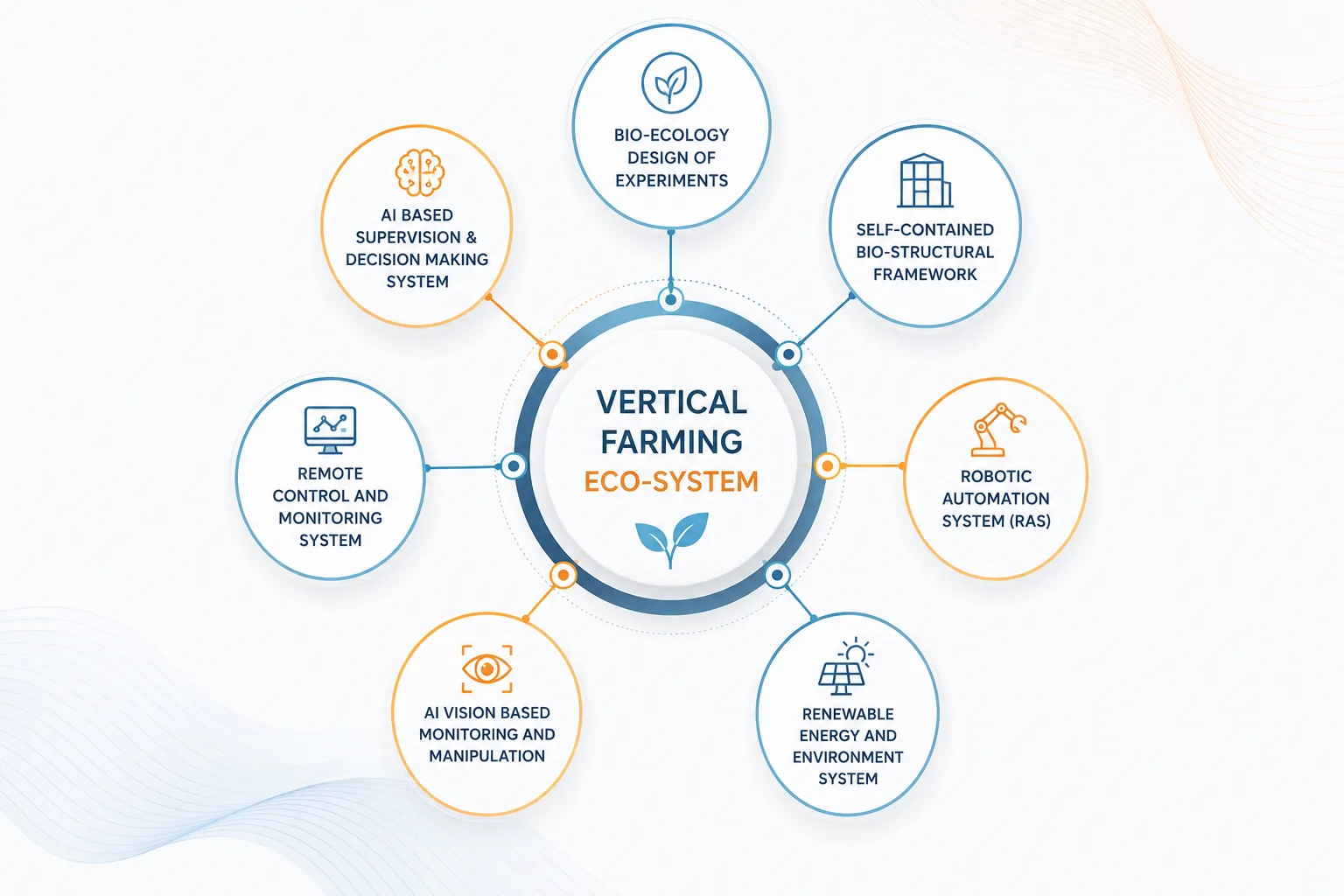
A self-contained vertical farm in a box: plant walls, a crop-tending robot, an IoT sensor grid, and renewable energy, wrapped in an AI that starts by following a grower's instructions, learns from every action, and progressively takes over the crop lifecycle — seeding to harvest — with minimal human touch.
Pitched and developed to proof-of-concept level with academic ecology and engineering partners, including live trials in botanical-garden growth facilities.
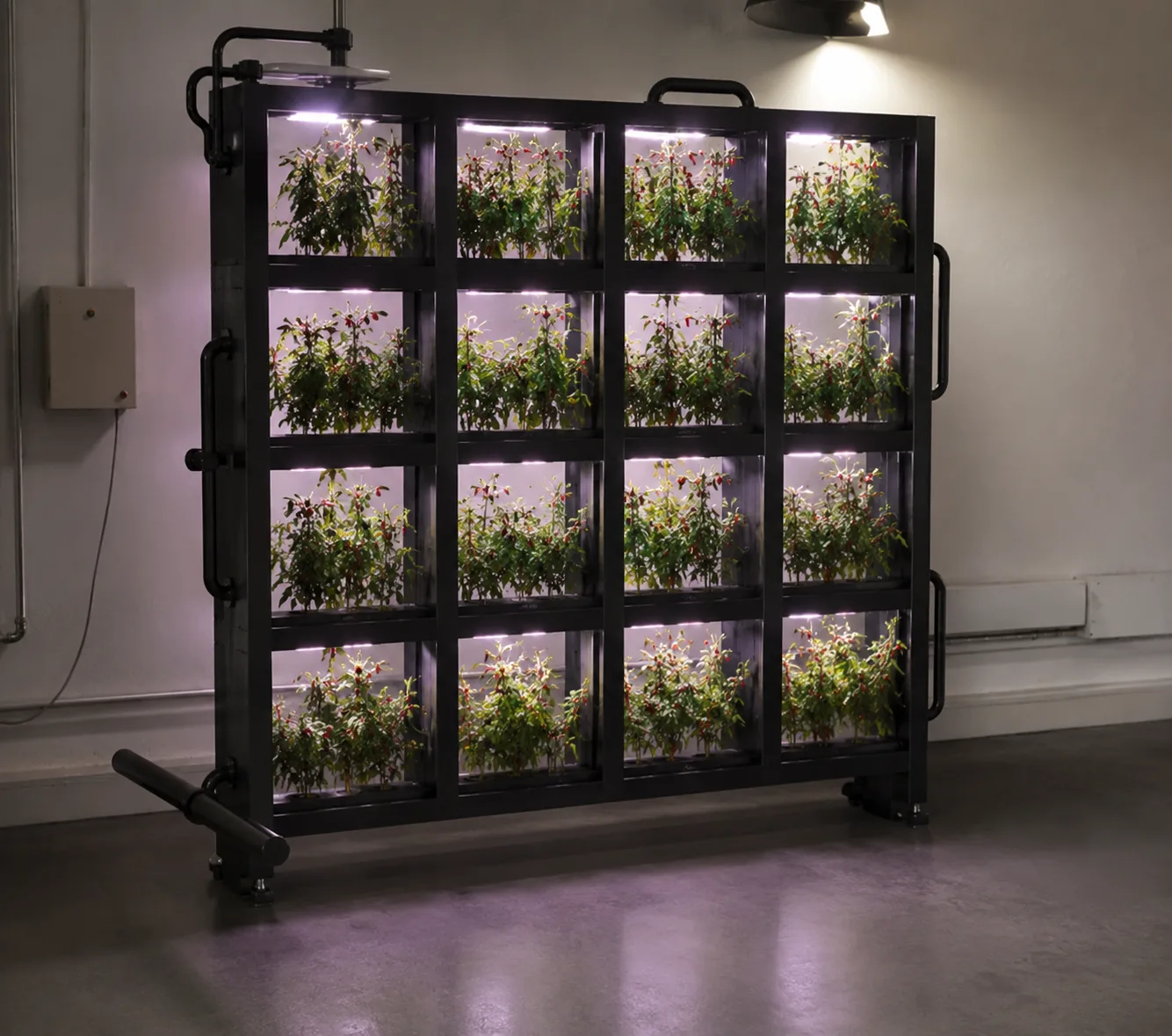
The Eco-System
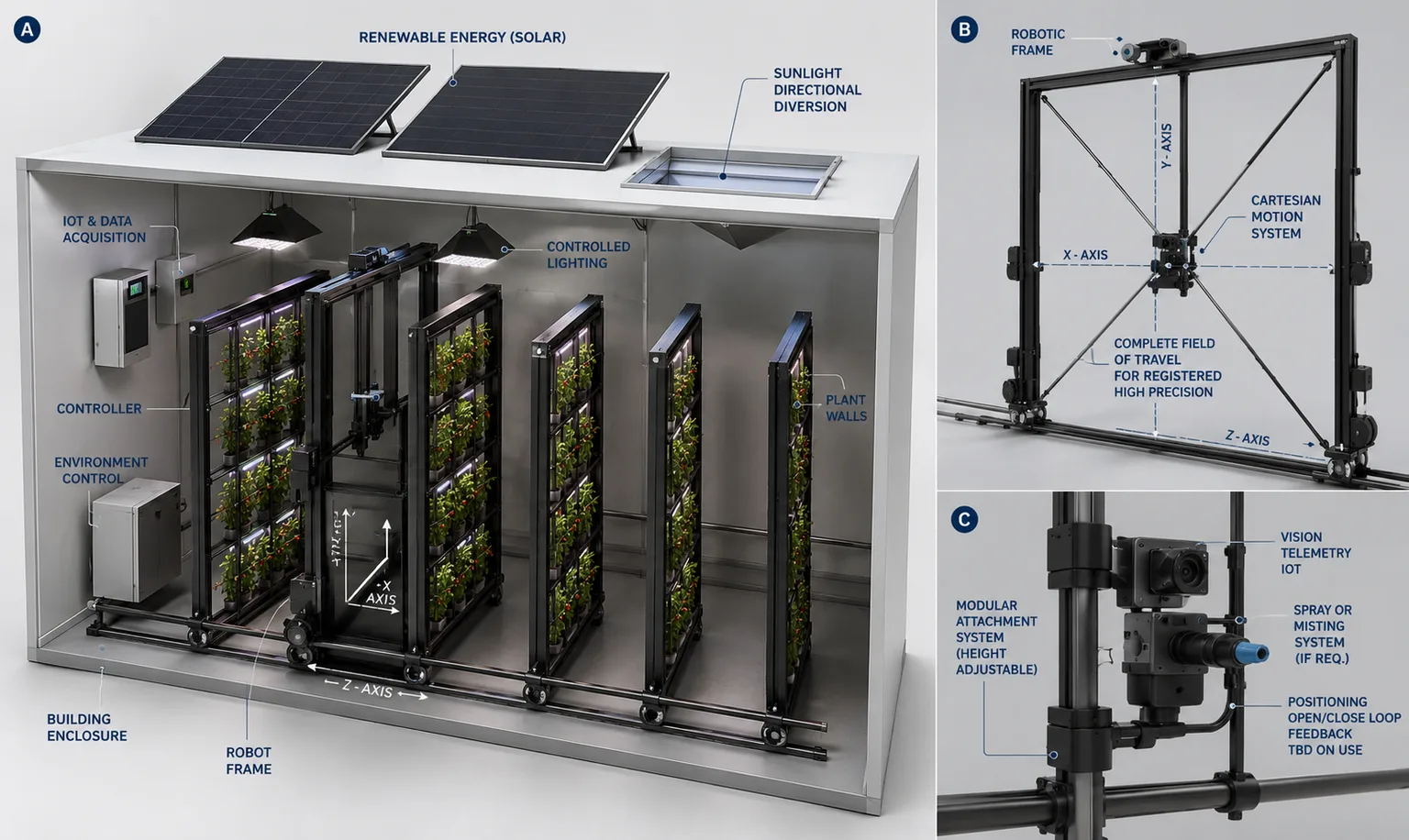
Bio-structural plant walls: the growing frame is the infrastructure — feed, lighting, and climate control are built into the wall the plants live on.
A cartesian crop robot working at high torque and speed — seeding, watering, spraying, and tending — positioning itself first by IoT beacons, then by vision.
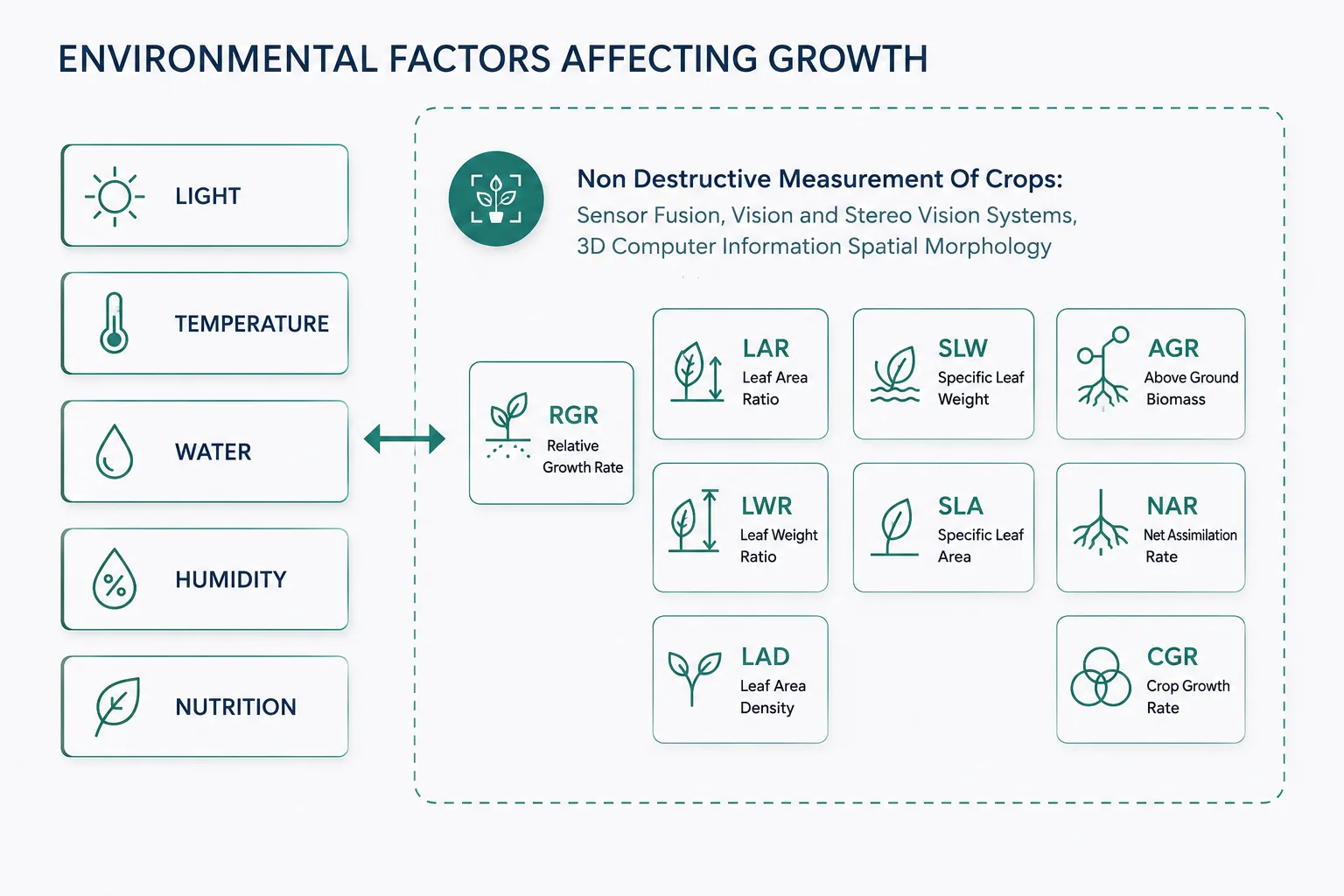
Controlled everything: light quantity, colour and duration; temperature by growth stage; humidity, water, and nutrition — every parameter a design-of-experiments variable, not a guess.
Renewable-powered and closed-loop: solar generation, recycled water and growing media — a system that sits near the market it feeds, not the farmland it replaced.
Remote supervision: the grower oversees the whole eco-system from a dashboard — and every intervention they make becomes training data.
The Intelligence
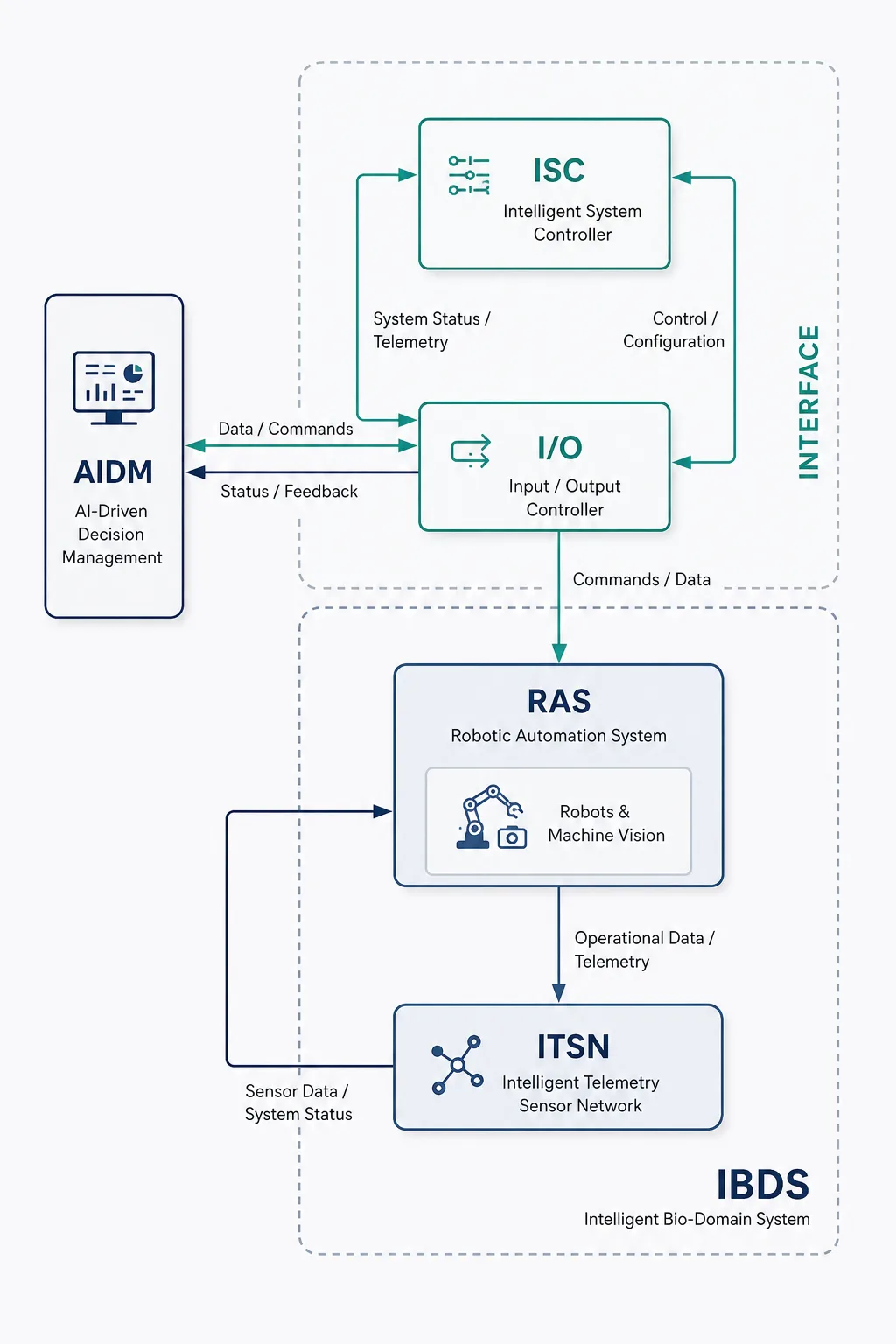
Five subsystems close the loop between biology and machine: a botanical data system that encodes what each crop needs; an IoT sensor network capturing the space-time state of the environment; the robotic automation system that acts; an AI decision layer that learns growth outcomes against actions taken; and a supervisory control interface that keeps the grower in command. Plant growth itself is measured non-destructively — stereovision and 3D morphology in place of hand measurement.
Outcomes & Uses
Productivity: an estimated 10× growth improvement from data-driven plant care and constant robotic attention — with multiple crops sharing a single square-metre footprint, year-round.
Organic by architecture: a sealed, controlled environment cuts pesticides and crop disease at the source, and shields growing from weather and urban pollution.
Local food economics: grown beside the marketplace — herbs, vegetables, and fruits that would otherwise be imported or trucked in, with import substitution as the system scales.
Who it's for: city councils greening their food footprint, housing developments feeding their residents, peri-urban farms multiplying yield per square metre, and households growing their own — all directly aligned with the UN Sustainable Development Goals on hunger, health, sustainable cities, and climate.
Where It Stands
The programme took the eco-system from concept through design-of-experiments research in controlled micro-environments to a working proof-of-concept plant wall and robotic system, with crop trials in botanical-garden growth facilities. The interdisciplinary core — agro-ecology on one side, robotics, IoT, vision, and AI on the other — is exactly the gap most vertical-farming ventures still have. If you're a grower, developer, or agritech investor looking at autonomous cultivation, the foundations are built and we're open to taking them further together.
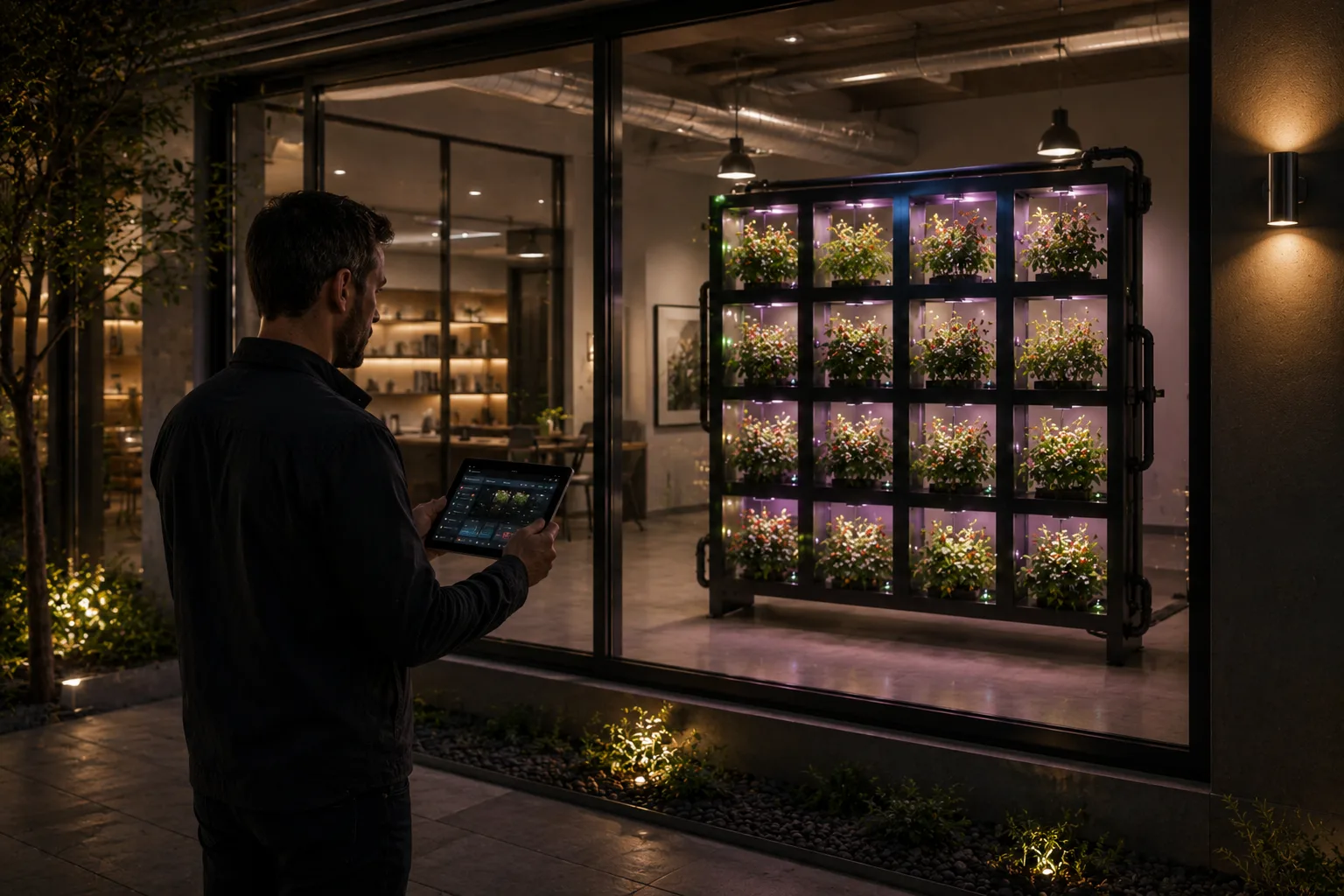
From crop science partnerships to the robotics, sensing, and AI stack — we've built the proof of concept and know where the hard problems are. Let's talk.