Policy Advocacy & Training IECE · Aliera · PakEVO Published 2025

Pakistan Energy Vehicle Adoption Roadmap 2025–2030

A delivery framework for electrification, industrial localisation & sustainable mobility · by Dr Aazir Khan

Pakistan's National Electric Vehicle Policy sets the targets. This 170-page roadmap sets out how to hit them: a sequenced, institutionally grounded delivery pathway that treats transport electrification as what it actually is — a macroeconomic, fiscal, industrial, and public-health reform, not a technology programme.

Developed at the Institute of Energy, Climate & Equity (IECE) with Aliera and PakEVO, as an implementation companion to the NEVP 2025–2030.
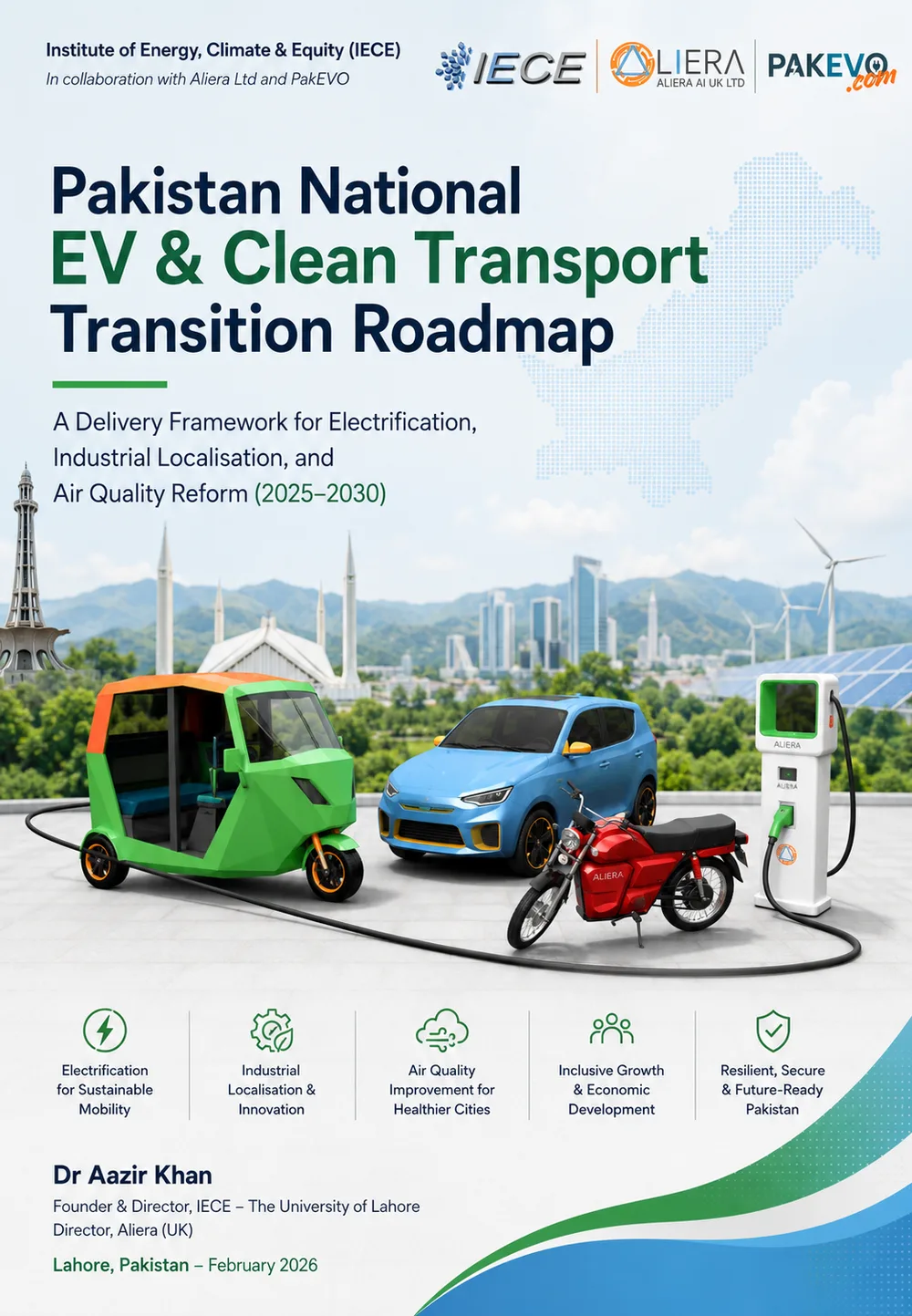
Cover of the Pakistan National EV & Clean Transport Transition Roadmap

© Dr Aazir Khan · Aliera Ltd UK 2026

Not a transport project. A cross-sector reform lever.

Road transport drives a growing share of Pakistan's petroleum imports — a structural macroeconomic exposure that electrification directly attacks.

In cities like Lahore, ambient PM2.5 routinely exceeds international guidelines by an order of magnitude. High-utilisation vehicle segments are the fastest lever on urban air.

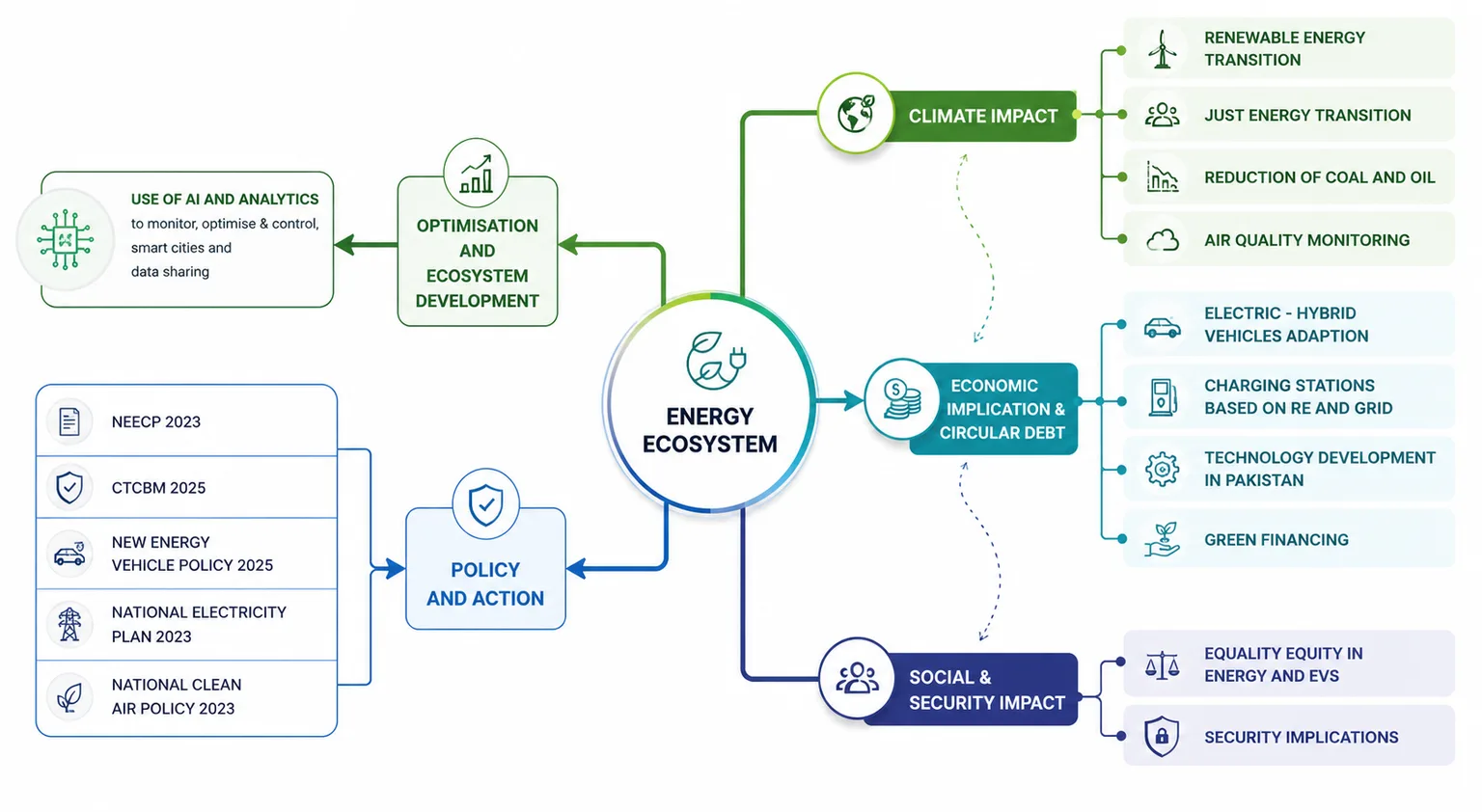
The transition interacts with power-sector reform (CTBCM), renewable integration, fiscal sustainability, and industrial upgrading — so the roadmap treats it as one system, not parallel projects.

For households, the arithmetic is immediate: a petrol motorcycle commuter spending PKR 15–20,000 a month on fuel can cut that dramatically with an electric retrofit or entry-level e-motorcycle.

Systems diagram: transport electrification as a core component of Pakistan's energy transition, linking energy ecosystem, policy, optimisation, and economic impact
Transport electrification as a core component of the national energy transition. © Dr Aazir Khan · Aliera Ltd UK 2026
~30%
EV share of new vehicle sales by 2030
$4–6bn
Fuel-import displacement per year by 2030
25–40 Mt
CO2e abated per year — a pillar of NDC 3.0
25–40%
PM2.5 reduction in priority corridors
3,000
Public charging stations · 15,000+ connectors

Indicative system-level outcomes by 2030 under disciplined implementation aligned with NEVP targets.

Three phases, each building the market the next one needs.

Phase I · 2025–26

Market Activation & Institutional Readiness. Standards, early fiscal instruments, strategic charging corridors, programme design — establishing irreversibility before scale.

Phase II · 2027–28

Scale-Up & Localisation. Fleet deployment, industrial upgrading, and blended-finance mechanisms deepen the market — scaling through standardisation, not pilots.

Phase III · 2029–30

System Integration & Optimisation. Electrification embeds into power-market reform (CTBCM), renewable integration (IGCEP), and long-term institutional finance.

Integrated phase delivery matrix 2025–2030: milestones across policy, finance, infrastructure, industry and governance workstreams
The integrated phase delivery matrix — the critical path across every workstream. © Dr Aazir Khan · Aliera Ltd UK 2026
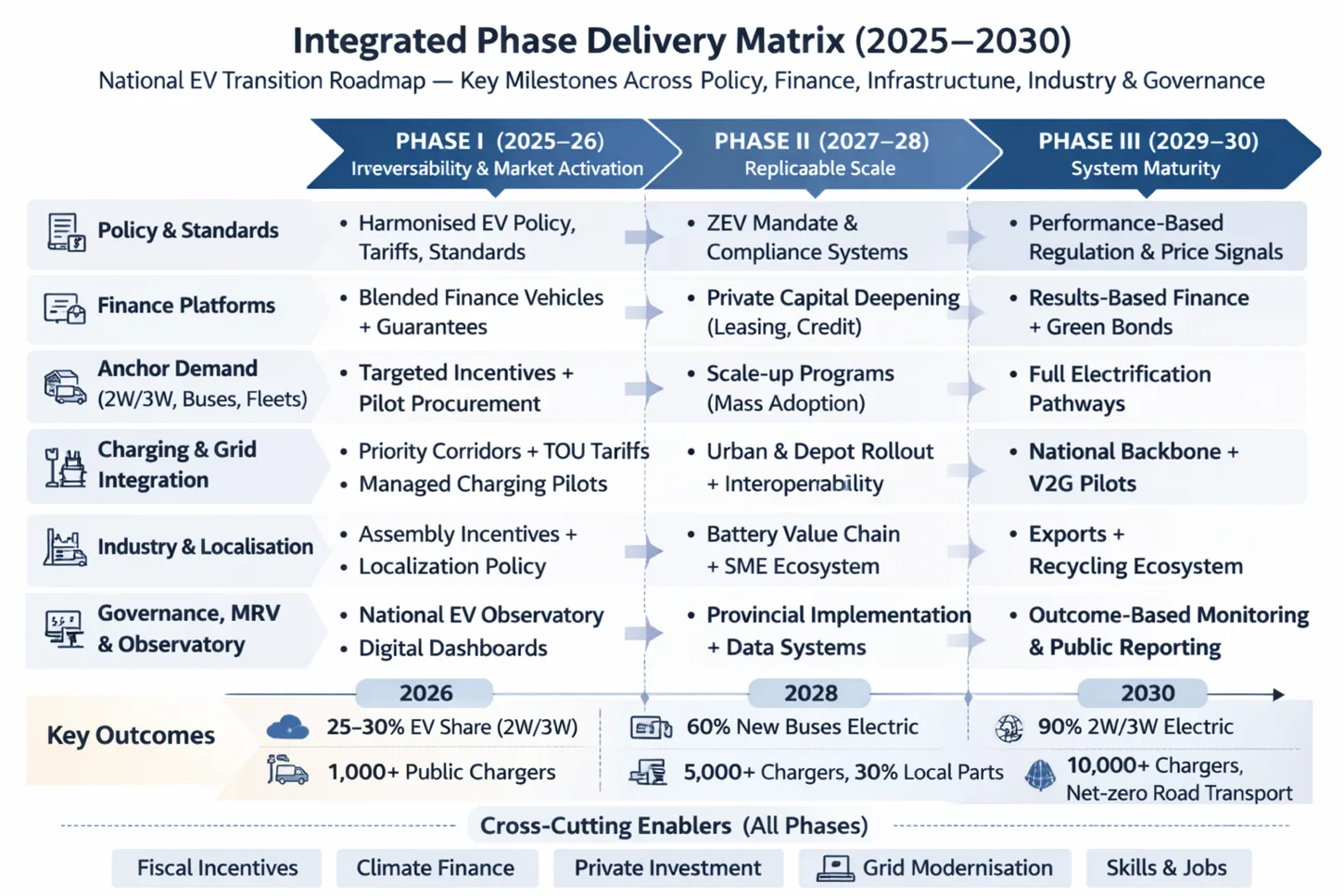
Delivery runs through programme pipelines, not fragmented pilots: urban e-bus deployment, corridor charging networks, two- and three-wheeler mass electrification, battery and manufacturing localisation clusters, and national digital mobility and MRV systems.

Start where the fuel burns: two- and three-wheelers first.

Adoption is sequenced by utilisation, anchored in two- and three-wheelers — the majority of the national fleet and the fastest route to fuel displacement — expanding into fleets, buses, and logistics.

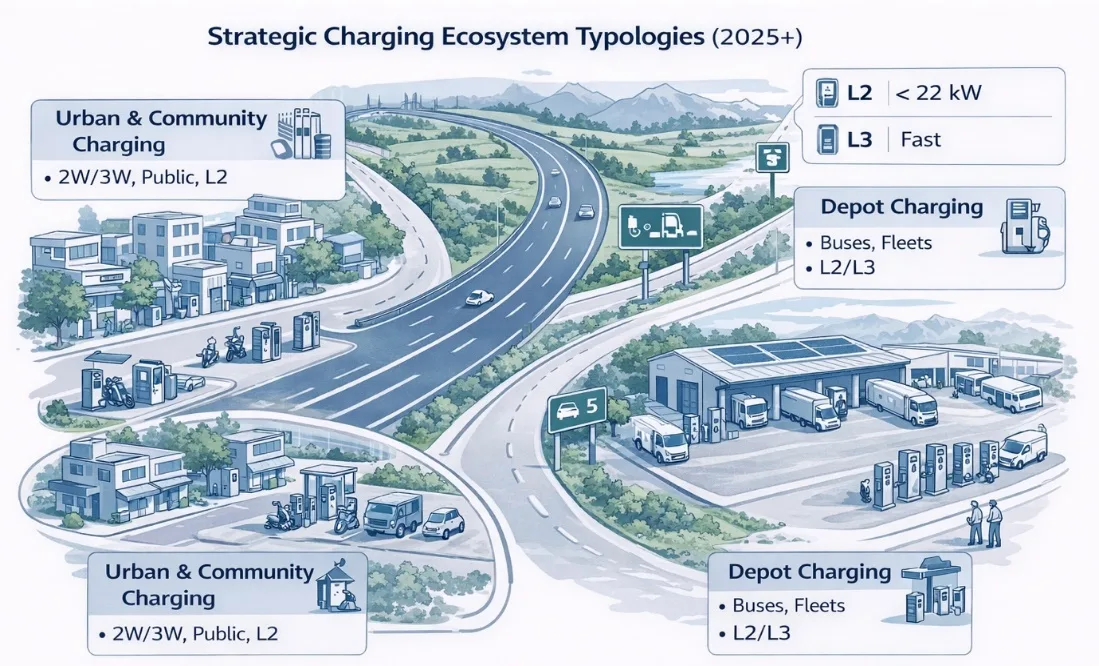
Charging follows a typology, not a scatter: urban and community charging, depot charging for fleets, and fast corridor backbones — each with its own economics and grid interface.

Battery value chains are mapped from cells to recycling, with governance nodes for standards, certification, and disposal.

Hybrids are treated honestly — as a transition technology for Pakistan — while digital, data, and MRV systems make the whole market measurable.

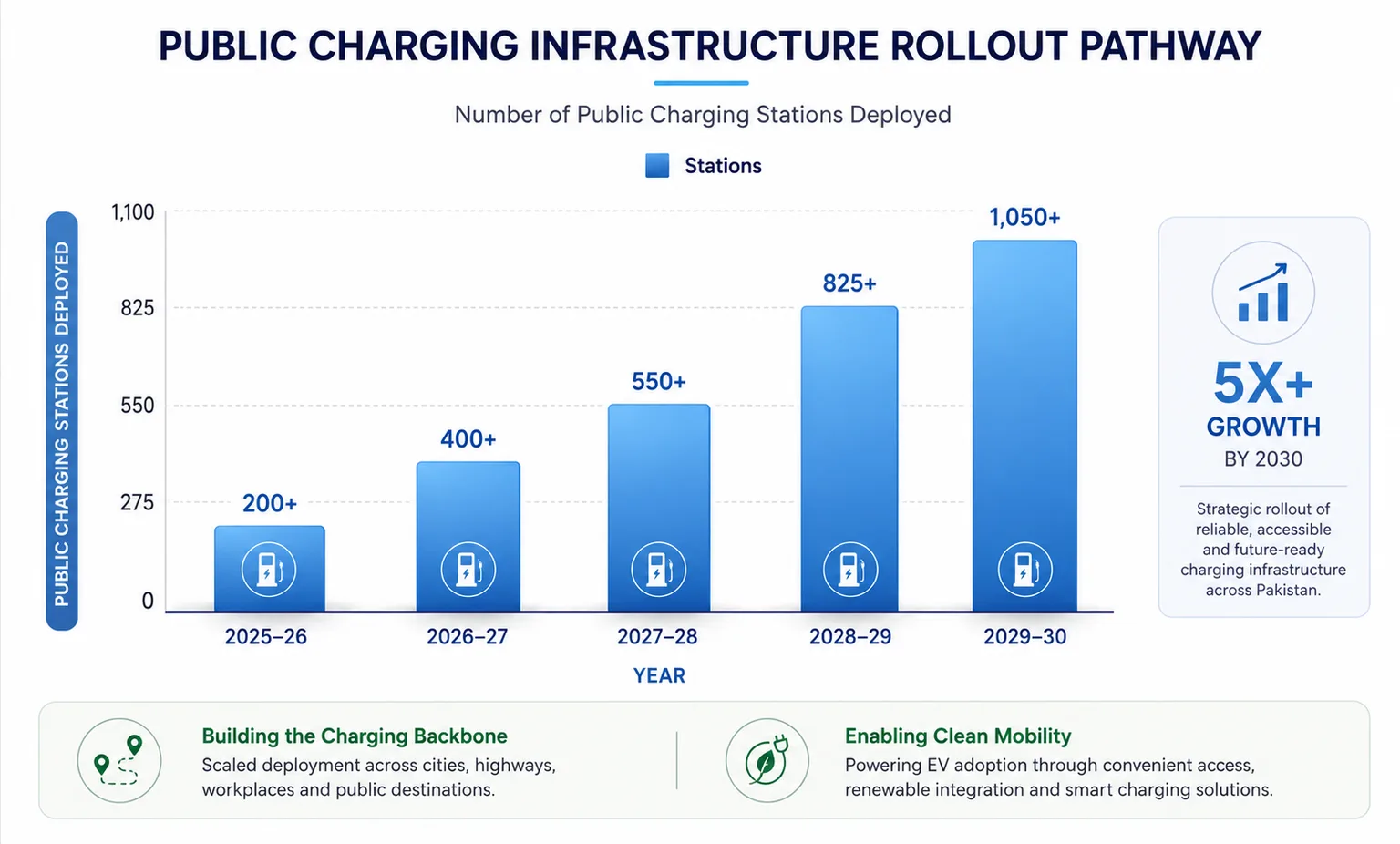
Chart: public charging infrastructure rollout pathway 2025–2030 Illustration of the national charging infrastructure typology: urban and community charging, depot charging, and fast corridor charging

© Dr Aazir Khan · Aliera Ltd UK 2026
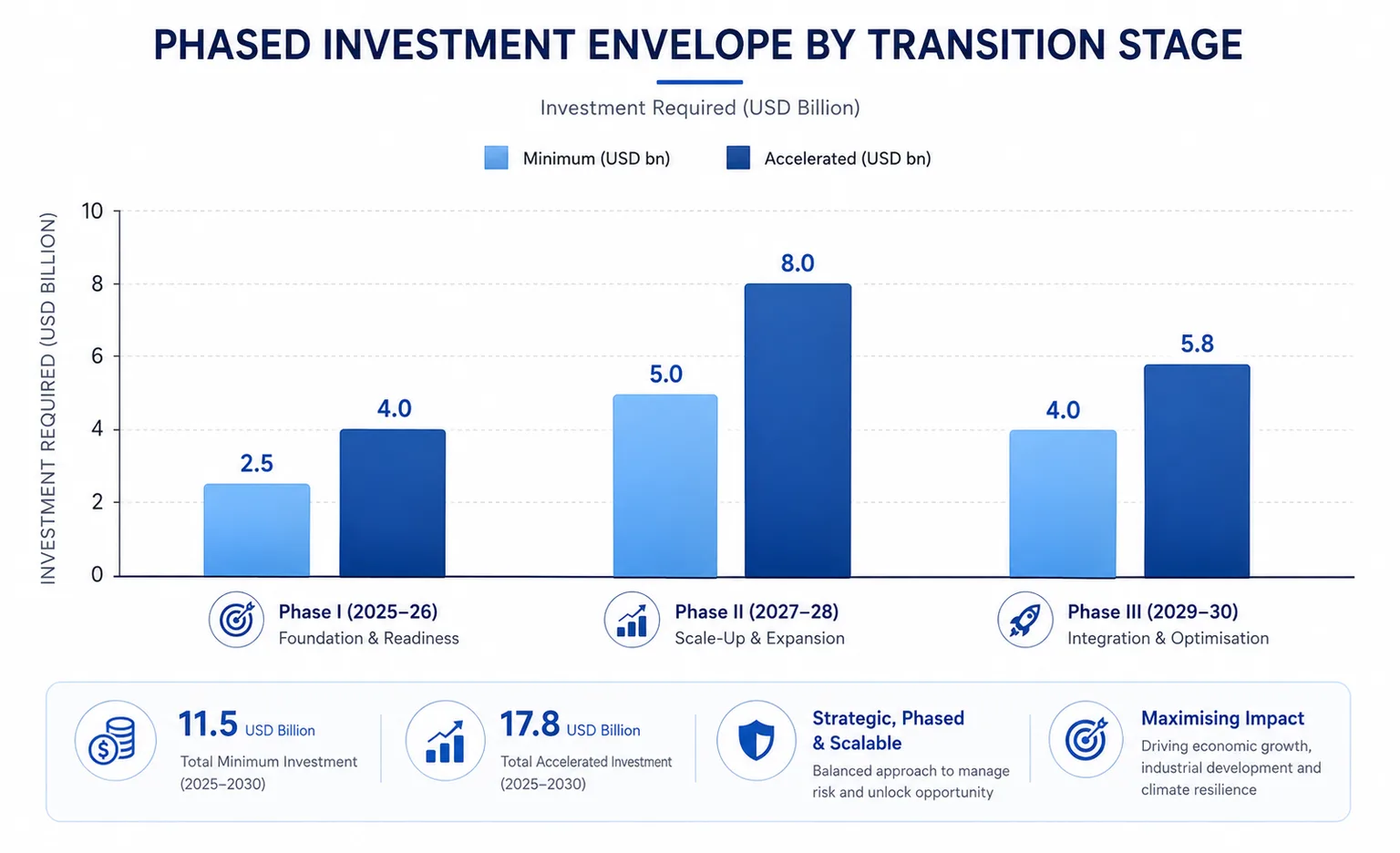
USD 12–30 billion — financed as a system, not as subsidies.

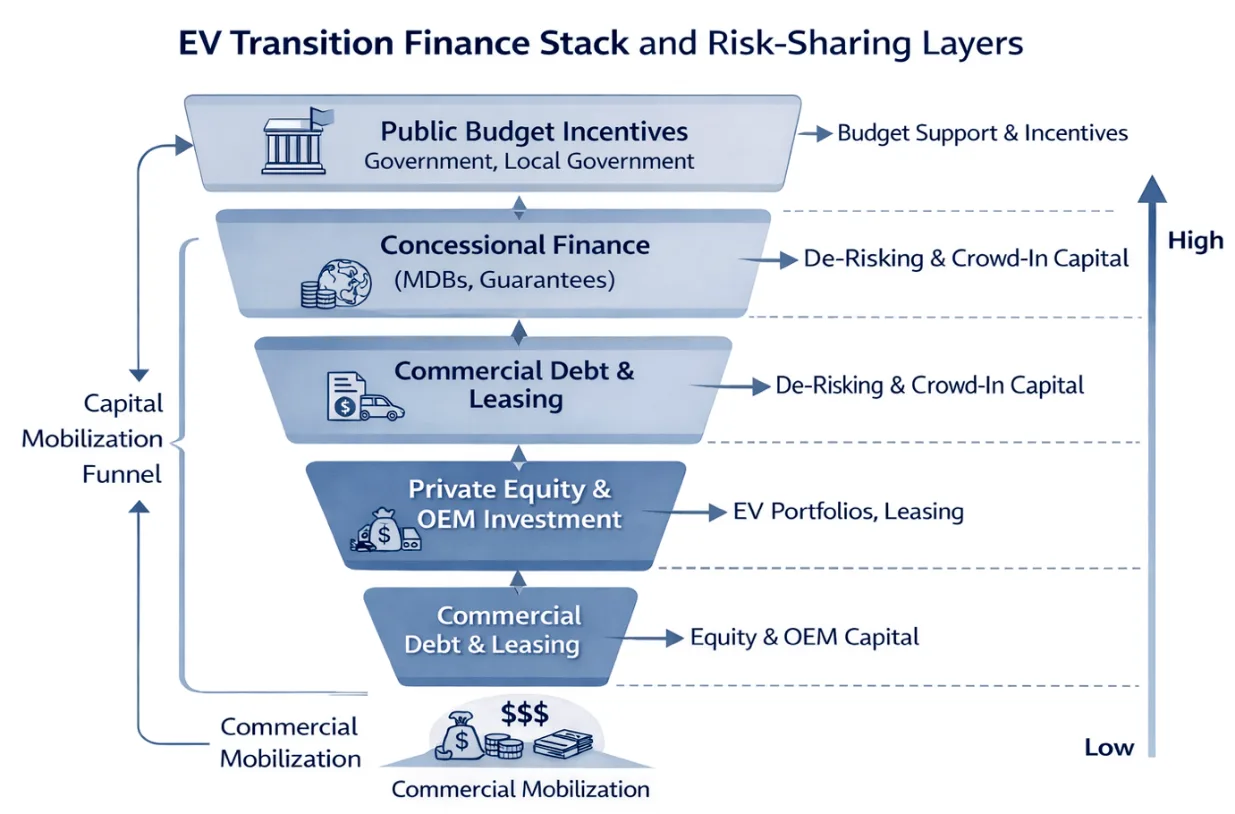
The roadmap sets two indicative pathways: a Minimum Transition of USD 12–18 billion cumulative to 2030, and an Accelerated Transition of USD 20–30 billion. Crucially, these are not fiscal outlays — most capital comes from private investment, consumer finance, leasing, and infrastructure operators, mobilised through:

Time-bound public finance focused on market-making, not permanent support.

Blended-finance vehicles that crowd in commercial banks, leasing firms, and infrastructure investors.

Climate finance and MDB platforms shifted from pilots to scalable, results-based programmes.

De-risking architecture against policy uncertainty, tariff instability, and early-infrastructure exposure.

The EV transition finance stack: public budget incentives, concessional finance, commercial debt and leasing, private equity and OEM investment Chart: phased investment envelope by transition stage, 2025–2030

© Dr Aazir Khan · Aliera Ltd UK 2026
Monitoring designed as a confidence-building instrument.

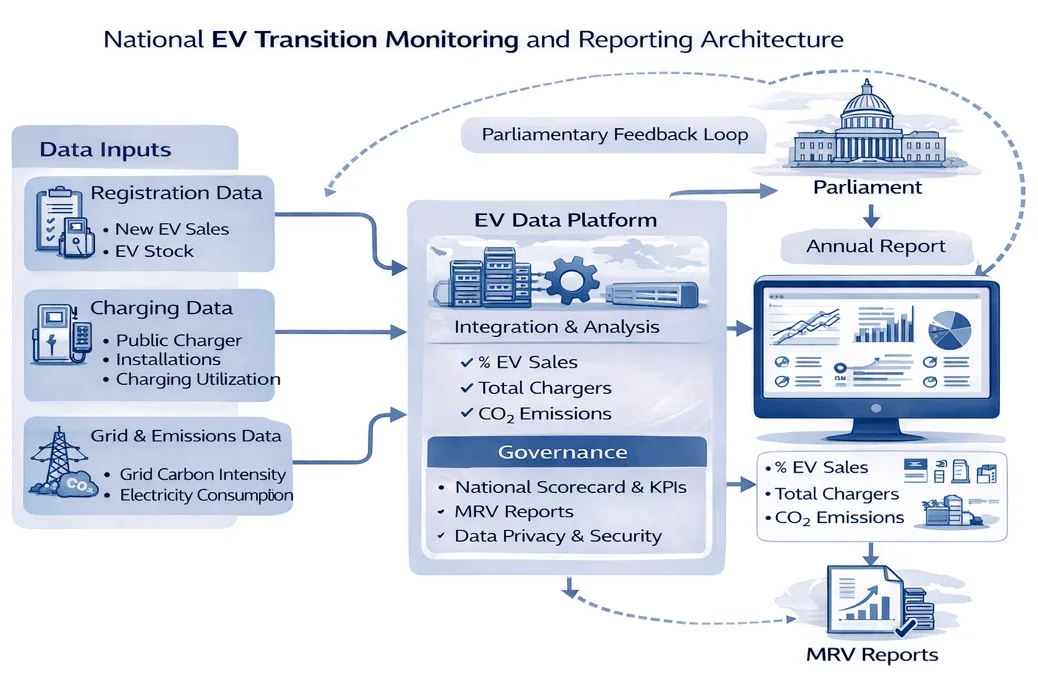
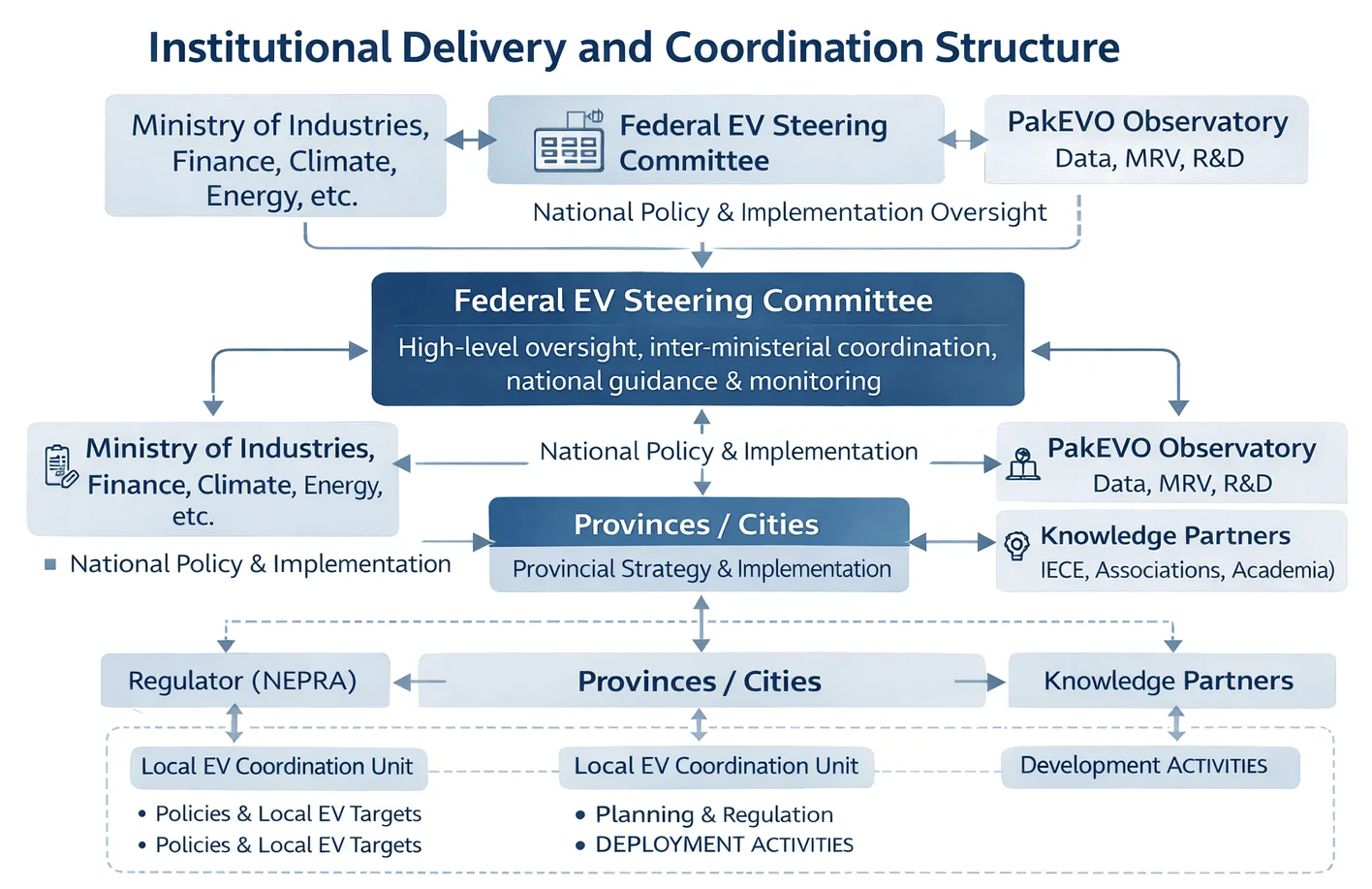
Delivery is anchored in federal–provincial coordination, standardised procurement frameworks, a National EV & Clean Transport Observatory for system oversight, and executive dashboards feeding an annual Parliamentary Scorecard. The point isn't compliance — it's adaptive governance, investor trust, and international credibility, with early-warning thresholds and structured course correction built in.

Institutional delivery and coordination structure: federal steering committee, ministries, provinces and cities, regulator, and the PakEVO observatory
The institutional delivery and coordination structure. © Dr Aazir Khan · Aliera Ltd UK 2026
National EV transition monitoring and reporting architecture: data inputs, EV data platform, executive dashboard, parliamentary feedback loop
The monitoring and reporting architecture — data to dashboard to Parliament. © Dr Aazir Khan · Aliera Ltd UK 2026
170 pages you can ask questions to.

Rather than publishing a static PDF, the roadmap is being deployed as an AI system on PakEVO: a language-model layer built over the full document that lets policymakers, investors, researchers, and the public query the roadmap directly — adoption pathways, financing instruments, phase milestones, KPIs — and get answers grounded in the source text. The same approach will appear here as its own project: turning national policy documents into living, queryable knowledge systems.

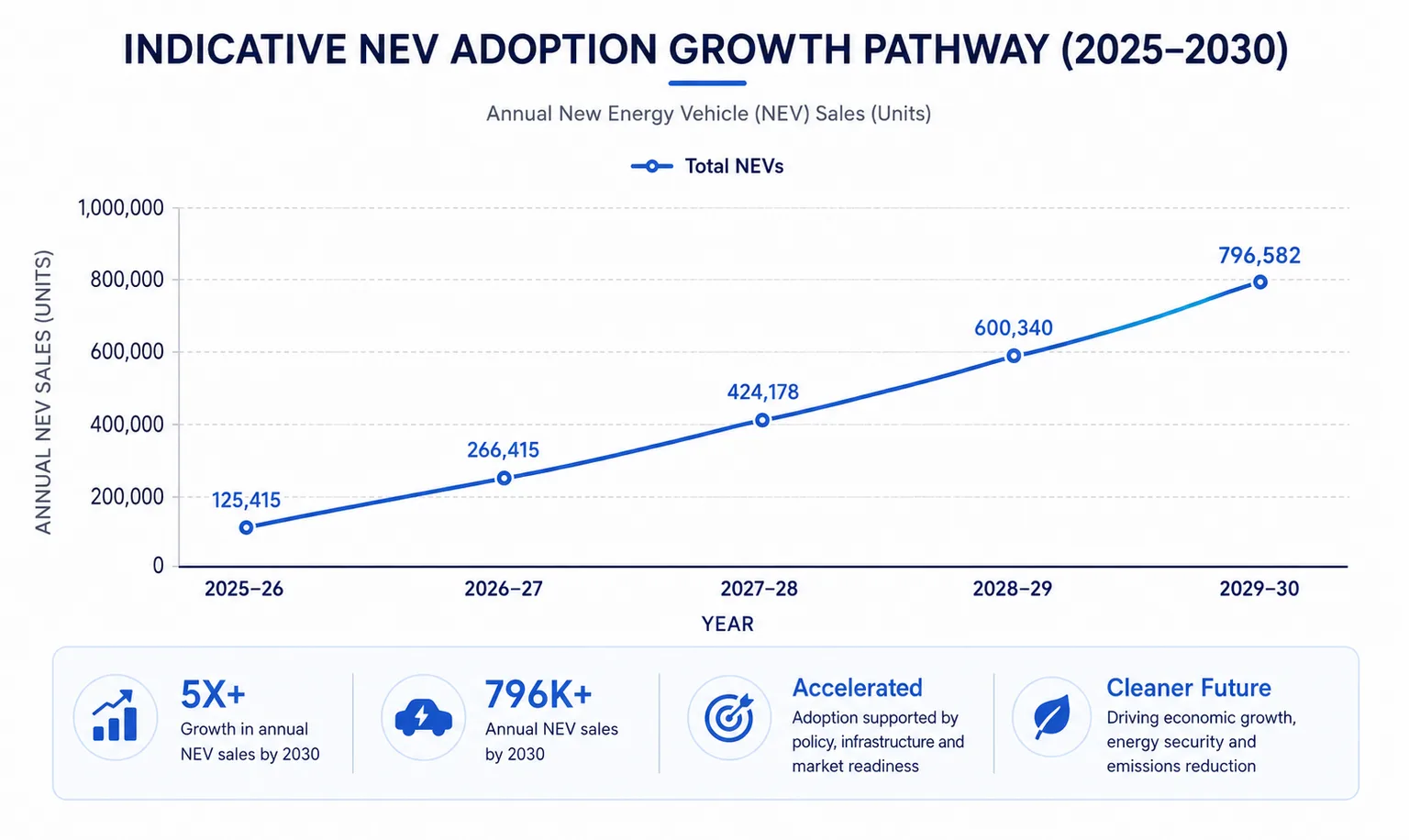
Chart: indicative national EV adoption growth pathway 2025–2030
The indicative NEV adoption growth pathway, 2025–2030. © Dr Aazir Khan · Aliera Ltd UK 2026
Working on the EV transition — policy, finance, or infrastructure?

The roadmap team engages with government, investors, industry, and development partners. Tell us where you sit in the transition.

Talk to the Team →